

From imperial cities to desert sands. Embark on an enchanting tour through Morocco’s spellbinding history and diverse landscapes—a journey brimming with vibrant colours and striking contrasts.
The following package of excursions:
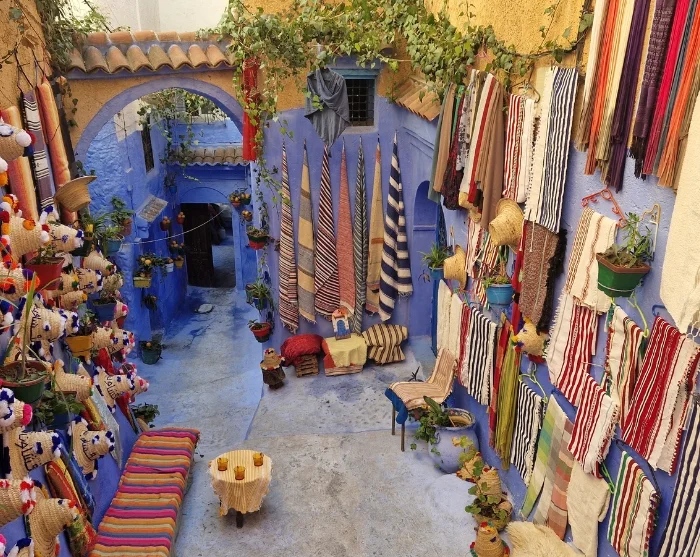
Join us for an adventure-filled tour through Morocco, exploring the bustling, colourful medinas of imperial cities, venturing across the golden dunes of the Sahara Desert, and wandering the iconic blue streets of Chefchaouen.
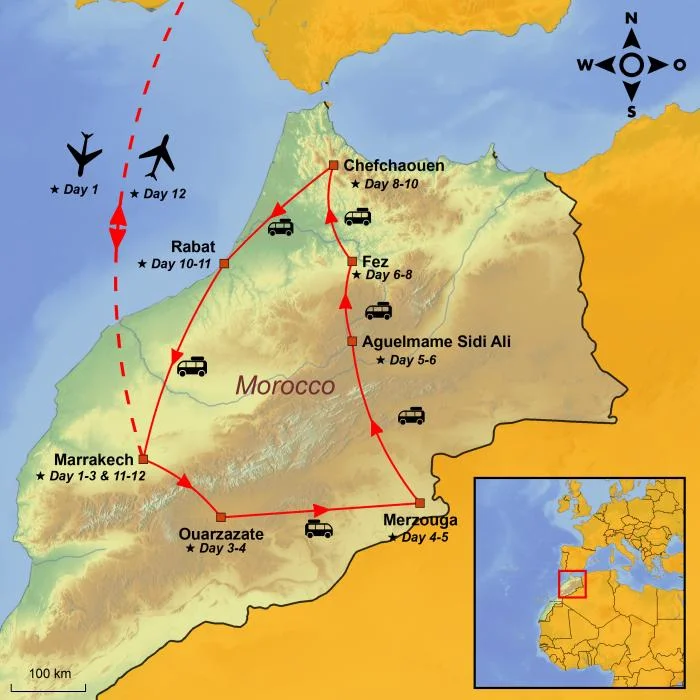
Your tour begins amid the lively atmosphere of Marrakech, before heading across the majestic Atlas Mountains via the breathtaking Tizi n’Tichka pass. Along the way, you’ll discover the ancient caravan town of Aït-Ben-Haddou and explore the famous film sets of Ouarzazate.
Journeying eastwards, the route guides you through verdant oases and fragrant rose fields all the way to the edge of the desert, where you’ll spend an unforgettable night beneath the stars in Merzouga. From there, travel north through another dramatic mountain pass and traditional Berber villages as you make your way to the historic imperial city of Fes.
En route, you’ll visit the impressive Roman ruins at Volubilis before the Rif Mountains lead you to the enchanting blue-hued town of Chefchaouen. Your adventure concludes in the country’s elegant capital, Rabat, and the contemporary city of Casablanca, where you’ll marvel at the magnificent Hassan II Mosque.

Today you will depart from your selected airport, with connecting flight(s) along the way. Upon arrival in Morocco, you’ll be met at the airport by our local partner and transferred to your hotel.
Depending on your arrival time, you may be able to start exploring the wonders of Marrakech on your own this afternoon. Or perhaps you’d simply like to relax before being welcomed to Morocco this evening with dinner on one of the city’s renowned rooftop terraces.
Today marks the real beginning of your Moroccan adventure.
Marrakech was founded over 1,000 years ago by the Almoravids, a Muslim Berber dynasty whose rule extended across northwest Africa and southern Spain—namely, what we now know as Morocco and Andalusia.
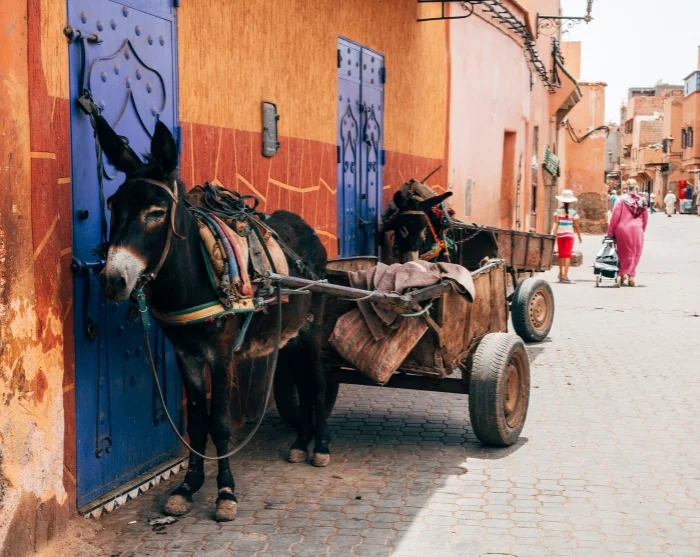
The medina of Marrakech, the city’s ancient quarter dating back more than a millennium, is listed today as a UNESCO world heritage site. Naturally, you’ll get to explore its narrow streets on a guided tour.
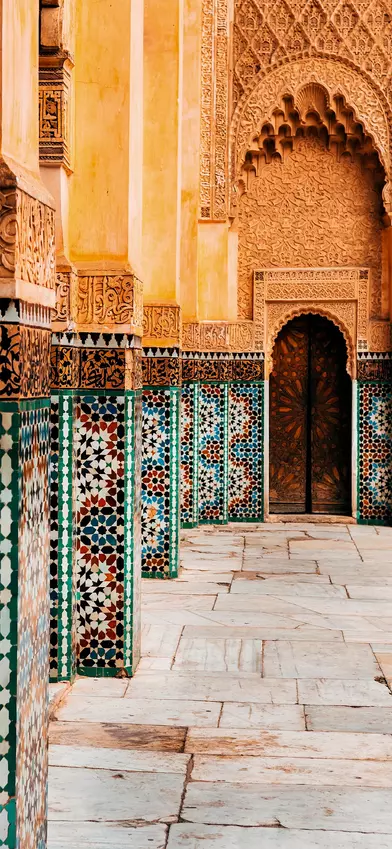
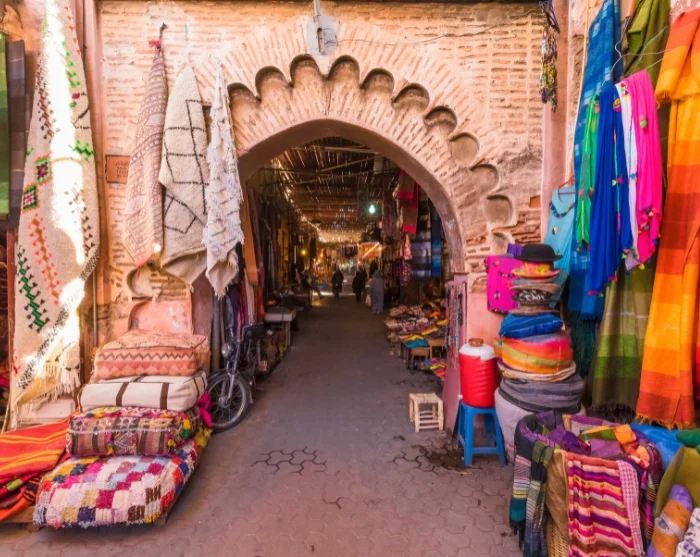
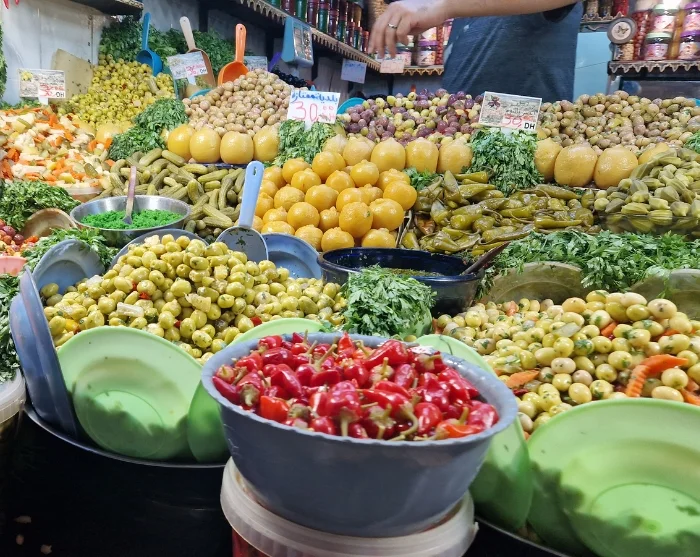
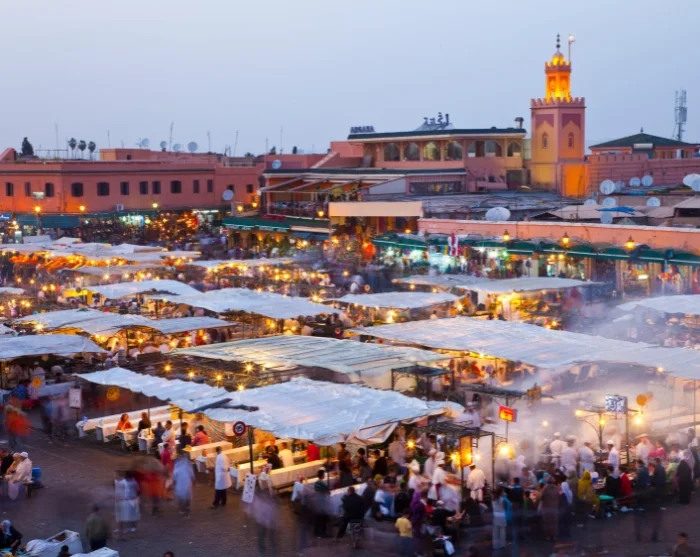
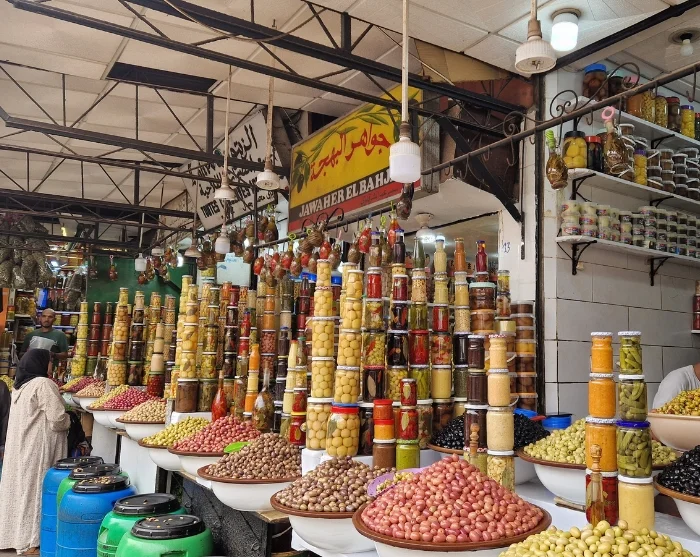
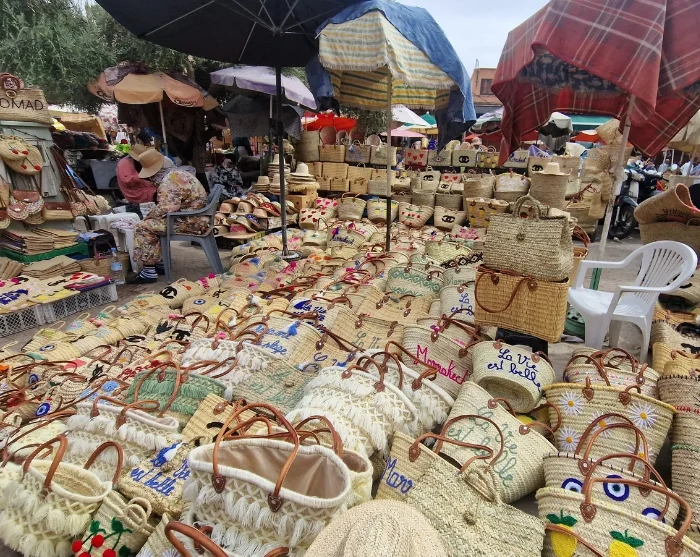
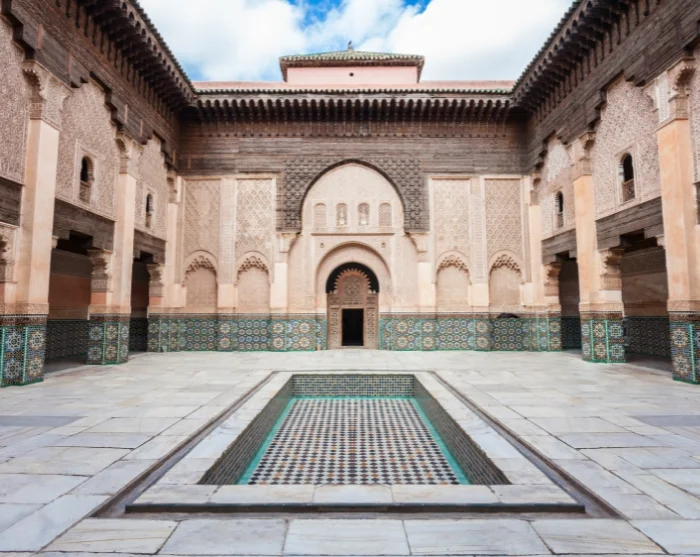
The medina forms the historic heart of the city. This is where you’ll find the old mosques and madrasas, where artisans work and where bustling trade takes place. The streets are famously narrow and maze-like; legend has it that such a layout allowed residents to hide from enemies, who would certainly get lost unless they were born inside the medina’s walls. But there’s no need to worry—your guide knows these lanes like the back of their hand and will smoothly lead you through even the most winding alleys. Your guide will usually ask if you have any particular interests or requests for your tour of the medina, and will tailor the route accordingly. We highly recommend a visit to the Ben Youssef Madrasa, a true architectural gem famed for its harmonious, symmetrical design, and exquisite decoration. The main square of the medina, Jemaa el-Fna, is also a must-see. By day, it might seem a little quiet, but it’s worth knowing your way around—it’s in the evenings that the square truly comes alive in scenes worthy of an Indiana Jones film! Snake charmers, food stalls, henna artists, and juice vendors all vie for your attention here. Watching over it all is the Koutoubia Minaret, both the city’s most iconic landmark and its tallest building.
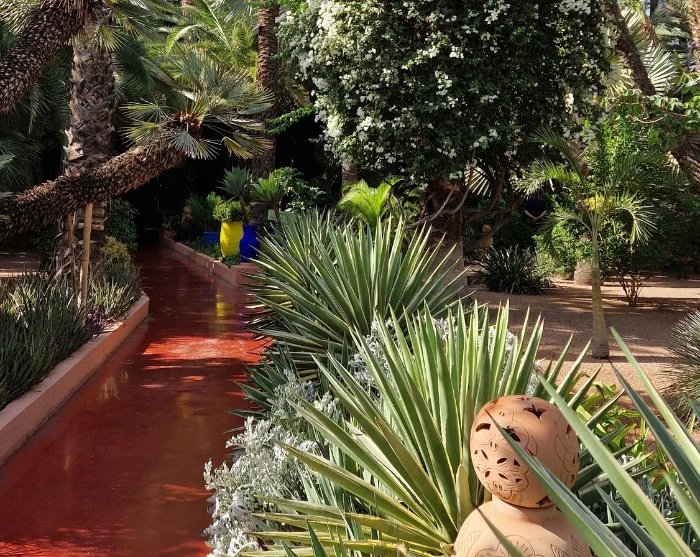
The day is divided into two parts: one is a guided tour of the medina, while the other takes you to the beautiful Jardin Majorelle and its adjoining Berber Museum. The garden is a wonderful oasis in the heart of the bustling city—although, admittedly, it’s a firm favourite among travellers. The Berber Museum, though compact, is truly fascinating and offers valuable insight into the Berber culture.
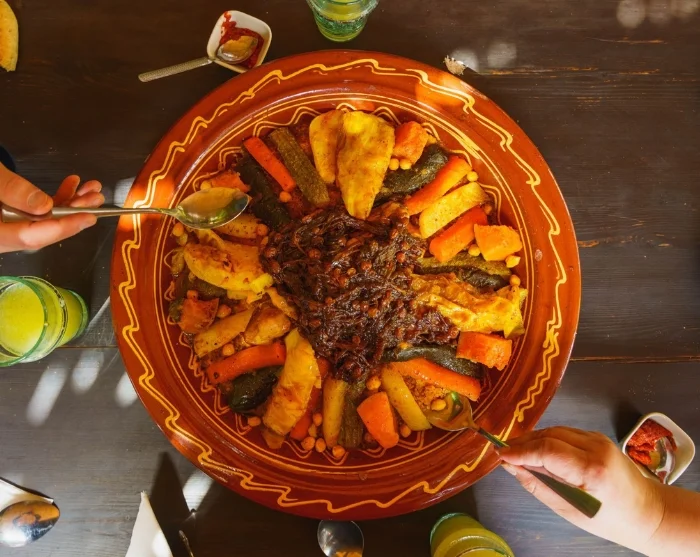
Whether you begin in the medina and end at the garden, or the other way around, depends on when we are able to secure tickets to Jardin Majorelle. Either way, today’s lunch will be enjoyed somewhere a little out of the ordinary.
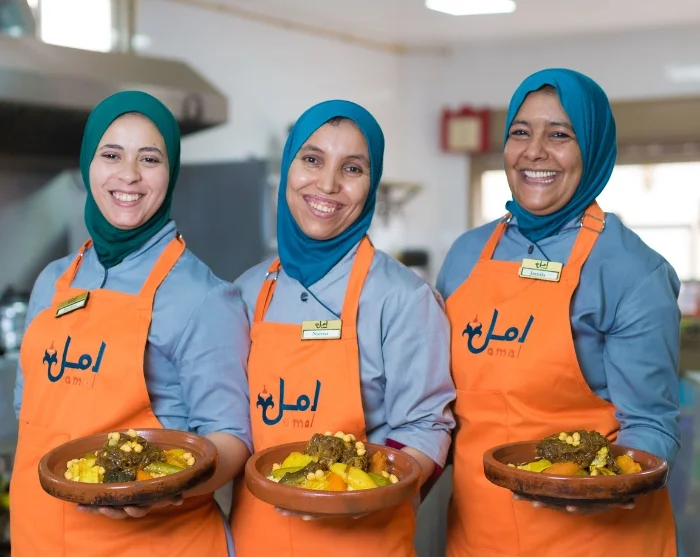
The Amal Women’s Training Centre is an NGO that empowers women to pursue careers in the restaurant industry. As part of this mission, they’ve established a restaurant where the menu changes daily to challenge the students as much as possible. Professional chefs oversee and support the women, ensuring constant learning, while you not only enjoy a delicious meal but also indirectly contribute to a very worthy cause.
The evening is yours to enjoy as you wish. Perhaps you’d like to lose yourself in the medina on your own, or maybe you’re simply feeling tired and would prefer a relaxing dinner at the hotel. Your guide is, of course, more than happy to recommend restaurants if you’re looking for suggestions.
A tour of Morocco often means travelling along scenic roads with ever-changing landscapes, and today marks the start of your adventure on the open road! Your driver will pick you up, and together you’ll set off towards Ouarzazate.
Before you really settle into your seat, you’ll make a stop at a supermarket. Naturally, plenty of meals are included in the days ahead, but honestly – what’s a road trip without a few snacks? That’s why your first stop today is here. Many of Morocco’s smaller hotels and riads (a traditional guesthouse) don’t serve alcohol. So, if you’d like a glass of wine or a beer with your meals over the next few days, it’s a good idea to pick some up in a well-stocked supermarket. Almost all hotels and riads are happy for you to bring your own wine, and they’ll gladly serve it at your table. Incidentally, Morocco produces some excellent wines!
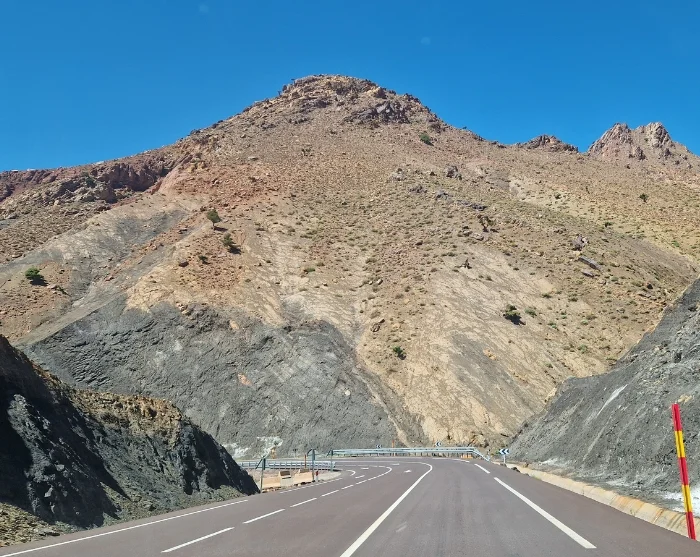
Today, you can look forward to crossing Morocco’s highest paved mountain pass: the Tizi n’Tichka Pass. At its summit, you’ll find yourself 2,260 metres above sea level, where, on clear days, you’ll be treated to truly breathtaking views of the stunning mountain scenery. The pass links the lush regions around Marrakech with the much drier areas beyond the Atlas Mountains. Moroccan roads are generally very well maintained, though you’ll notice plenty of speed restrictions (which are well respected!), so despite the excellent roads, the pace tends to be relaxed—giving you every reason to sit back and savour the views. If you’d like to stop and snap some photos along the way, please do speak up!
By late morning, you’ll have traversed the pass and reached the drier side. The Atlas Mountains are still visible on the horizon, but here the landscape is dominated by rocky, sand-coloured desert, dotted with traditional adobe houses blending seamlessly into their surroundings.
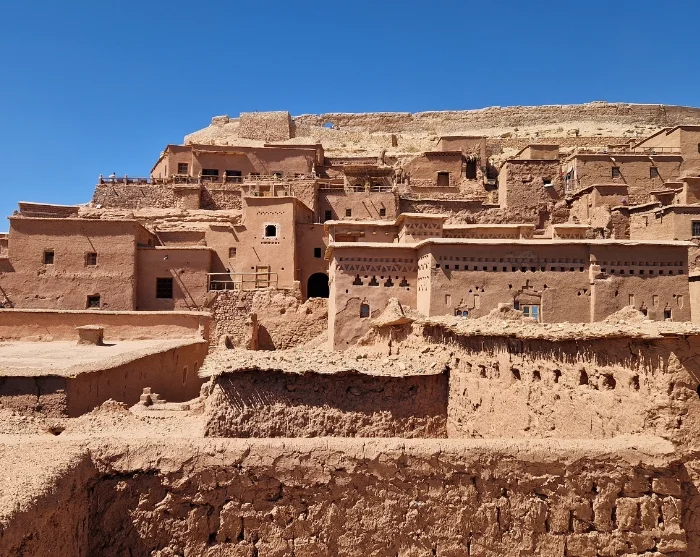
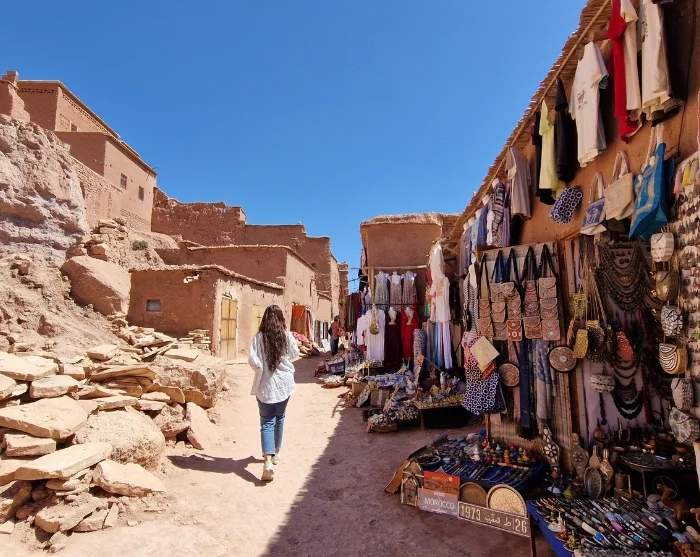
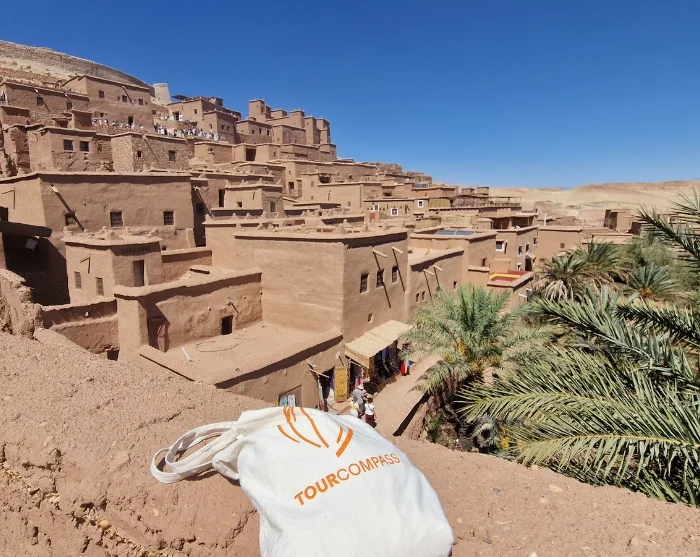
Your first stop on this side of the mountains is Ksar Aït-Ben-Haddou, once an important hub on the ancient caravan route between the Sahara and Marrakech. Today, however, Aït-Ben-Haddou is best known as the backdrop for numerous films, and since 1987, has been listed as a UNESCO world heritage site.
Of course, there’s time for a stroll through the fortified town – which is exactly what the word “ksar” means: fortified town.
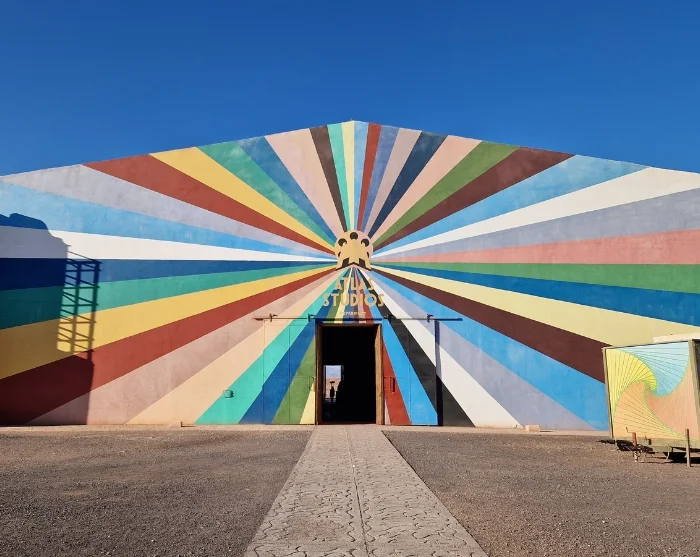
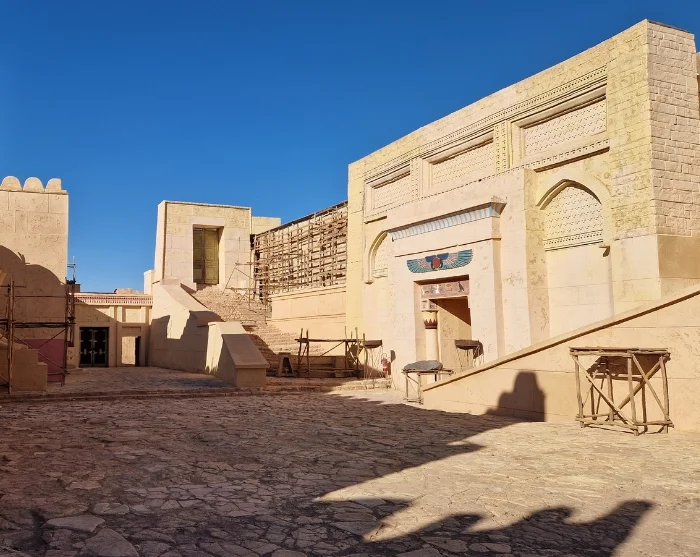
In the afternoon, your journey will continue to the outskirts of Ouarzazate, where you’ll discover a slice of Morocco’s very own Hollywood. If you’ve watched Game of Thrones, Gladiator, Prison Break, or perhaps The Jewel of the Nile, then you’ve seen scenes filmed here, partly at Atlas Studios. You’ll enjoy a guided tour of the sets and, to be honest, it’s a truly impressive way to round off the day!
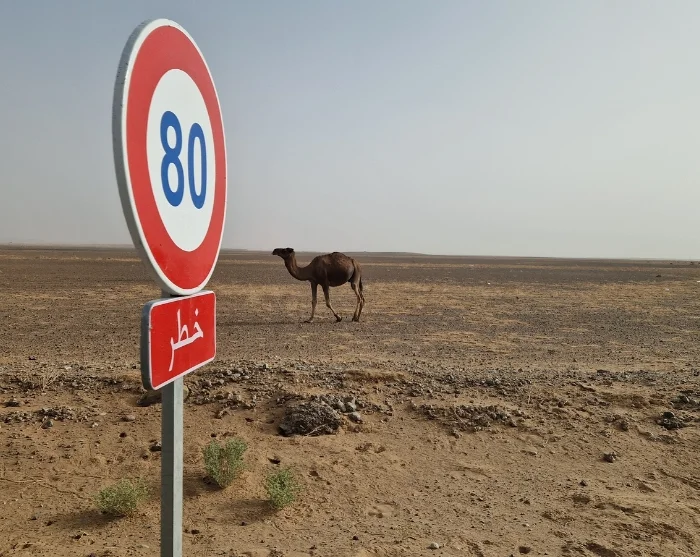
Today, your tour will continue as you leave Ouarzazate behind and head for Merzouga.
Just outside Ouarzazate, you’ll pass through an area that showcases Morocco’s commitment to green energy. Although you won’t see the facility itself, the appearance of numerous electricity pylons suddenly rising up from the otherwise barren landscape is a tell-tale sign that you’re close to the Noor Ouarzazate solar power plant – one of the largest in the world. The tall pylons look almost surreal set against the bare earth and golden dust.
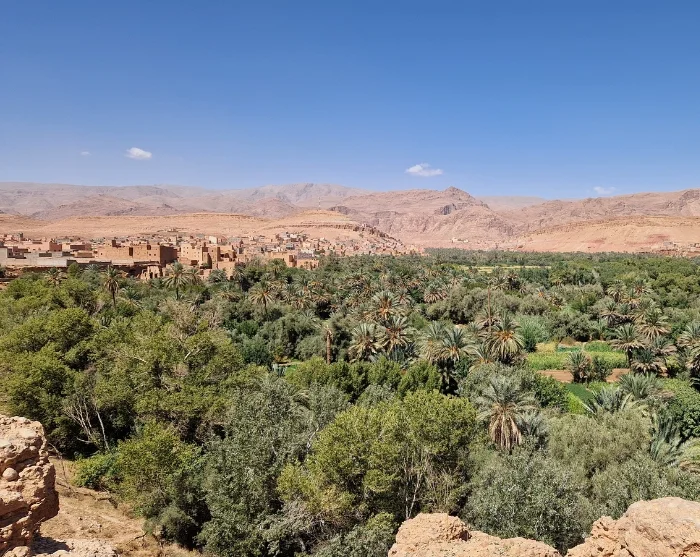
From here, you’ll continue your journey through a captivating landscape of rugged rocks and imposing stone formations. Then, all at once, the scenery transforms: an oasis springs to life amid the arid wilderness. On the valley floor, lush palms, fertile patches of farmland, and irrigation channels spread out before your eyes. The first oasis you’ll encounter is Skoura, where ancient kasbahs and earthen houses are scattered between towering palm trees.
A little further east lies Kelaat M’Gouna, also known as the City of Roses. Here, fields of damask roses stretch across the landscape. The blossoms are transformed into rosewater, perfumes, and essential oils in small, community-run cooperatives.
Your journey then continues towards the town of Dades and the wide Dades Valley. Here, the valley reveals its grandeur – the river winds its way clearly through the scenery, while palms and fields form a distinct green ribbon set amongst the stones and sand.
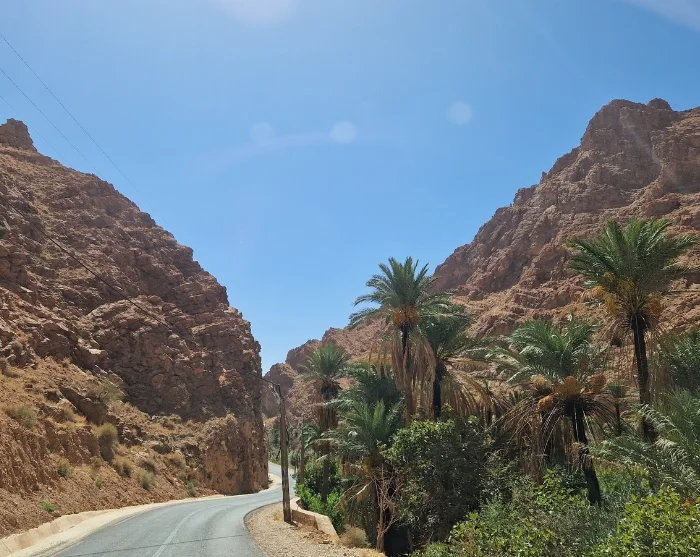
The road will lead you right through the Dades Valley, giving you sweeping views over the fields and clusters of swaying palm trees, all the while dramatic cliffs tower above. Ancient kasbahs, like little jewels, are dotted among the farmland, highlighting the striking contrast between the lush valley floor and the stark surrounding cliffs.
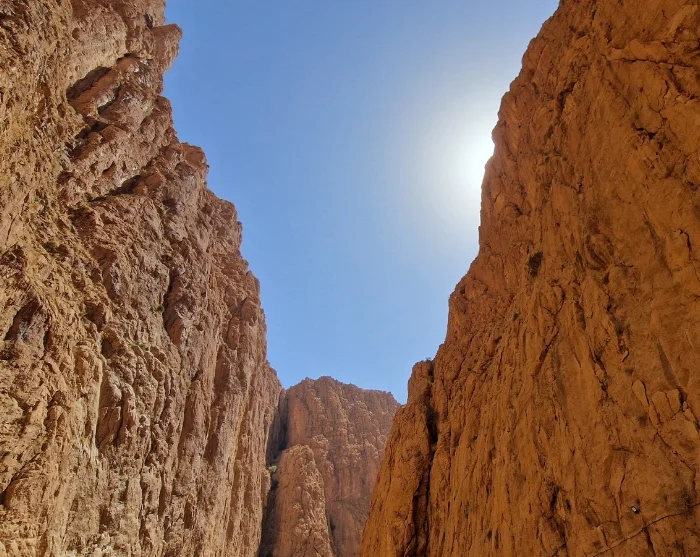
As you approach Tinghir, the valley narrows and the river nearly disappears between the steep rocky cliffs. Here, the Todra Gorge unfolds and the road hugs the narrow valley floor, where sunlight only reaches the ground for a couple of hours each day. You’ll leave your vehicle and walk the final stretch right into the heart of the gorge. The clear river runs alongside the road, and on a warm day, it’s temptingly refreshing to dip your toes in the water.
Further east, the valley floor widens and the lush vegetation begins to thin out. Here, you will truly start to feel the Sahara Desert taking hold. Sand becomes a defining feature of the landscape, and this area is famed for its fossils and traditional stone buildings.
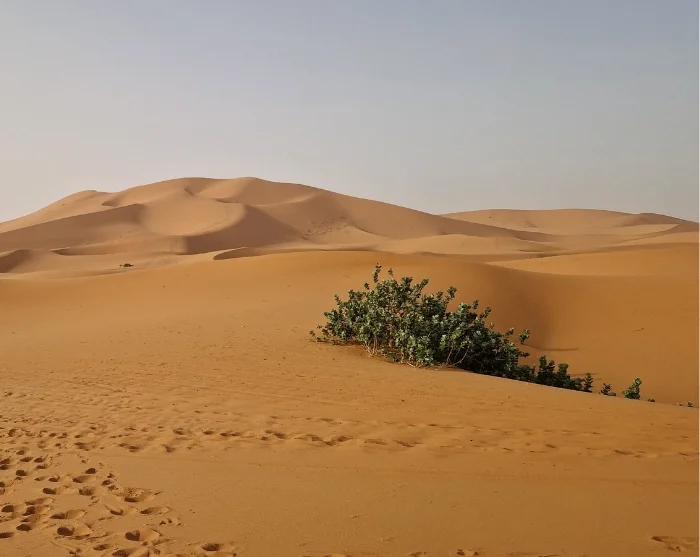
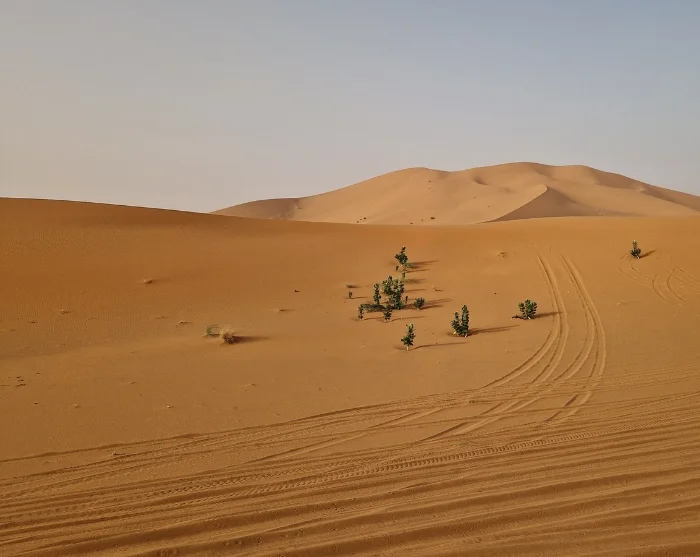
The closer you get to Merzouga, the more the desert comes into its own. Palm trees and oases vanish, replaced by sand dunes rising on the horizon. Eventually, the great Erg Chebbi dunes stand before you: towering, rolling mountains of sand glowing in the sunset, instantly recognisable by their deep orange hues and gentle curves.
Here, you’ll be swapping vehicles for a while. You’ll need a sturdy four-wheel drive to reach tonight’s camp. Get ready! The drive through the dunes isn’t long, but it’s sure to give your adrenaline a little boost.
You’ll spend the night in a desert camp beneath a blanket of stars – and the sands of the Sahara.
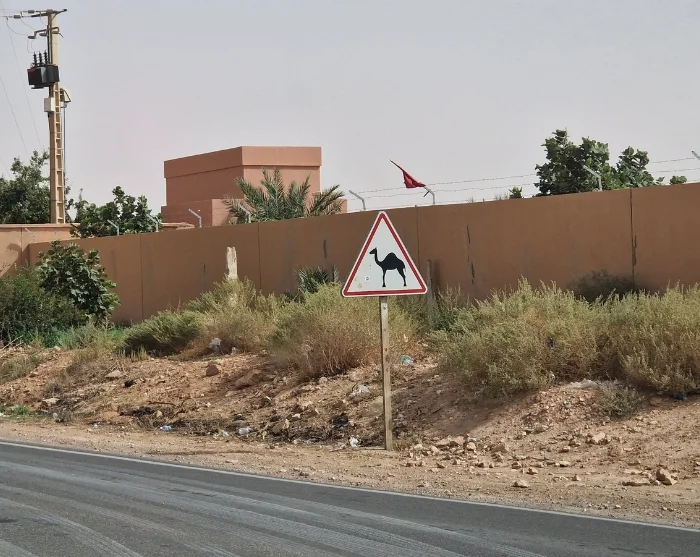
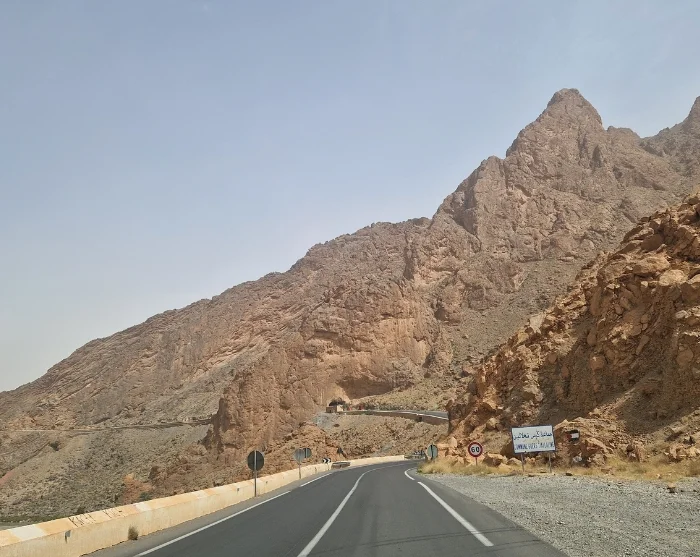
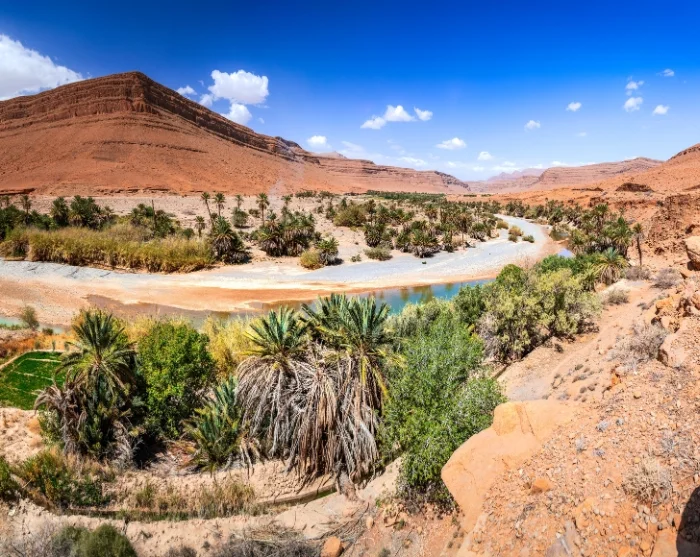
After breakfast, it’s time to hop back in the car. Your four-wheel drive will take you back through the sands to the car park. From there, you’ll head northwards. Gradually, the landscape becomes more hilly, giving you one last chance to soak up the views across the Dades Valley.
The scenery changes once again, now resembling the Wild West, with dramatic, towering red rock formations. You’ll spend stretches of the route following the Ziz River towards the Zaabal tunnel, which cuts through the mountain of the same name. The tunnel was built by the French Foreign Legion in 1929, during the period of French colonial rule in Morocco, providing a means for the colonial power to move troops and supplies swiftly and safely through the High Atlas – the loftiest part of the Atlas Mountains. Later, it played an important role in trade, as the tunnel made it far easier to transport goods across these mountains.
As you emerge on the other side, the landscape slowly unfolds before you. The rugged rock formations of the High Atlas Mountains give way to gentler, greener hills. Small Berber villages begin to appear amongst the fields and fruit trees, and the road winds along natural riverbeds that cut through the terrain in long green ribbons.
Today’s drive ends at a hotel by Lake Aguelmame Sidi Ali. While many choose to travel the entire distance from Merzouga to Fes in a single day, we believe that’s quite a lengthy journey. That’s why we’ve included an overnight stay along the way. There is only one hotel on this stretch that meets our standards, and if we’re unable to secure a room there, you’ll travel all the way to Fes today instead. In return, you’ll enjoy three nights in Fes.
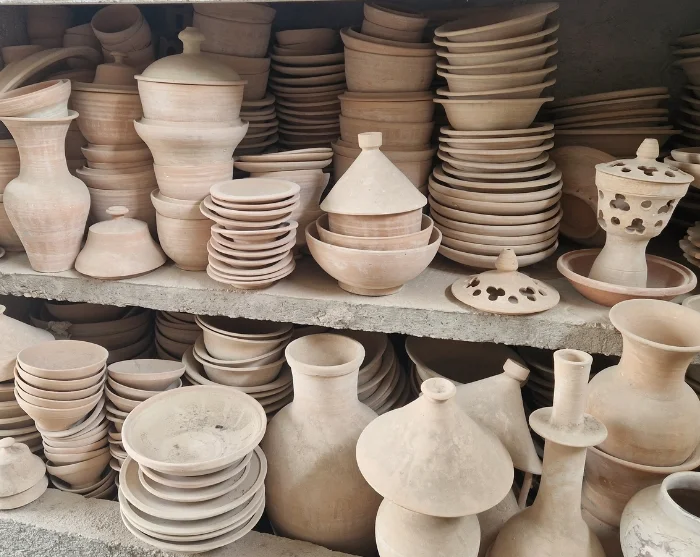
From Aguelmame Sidi Ali, you’ll make the final drive to Fes, where lunch will be waiting for you. This afternoon, you can look forward to a guided walk through the medina. If you stayed overnight in Fes, the morning is yours to enjoy as you wish until lunch, as yesterday’s journey was a long one and you may appreciate a lie-in.
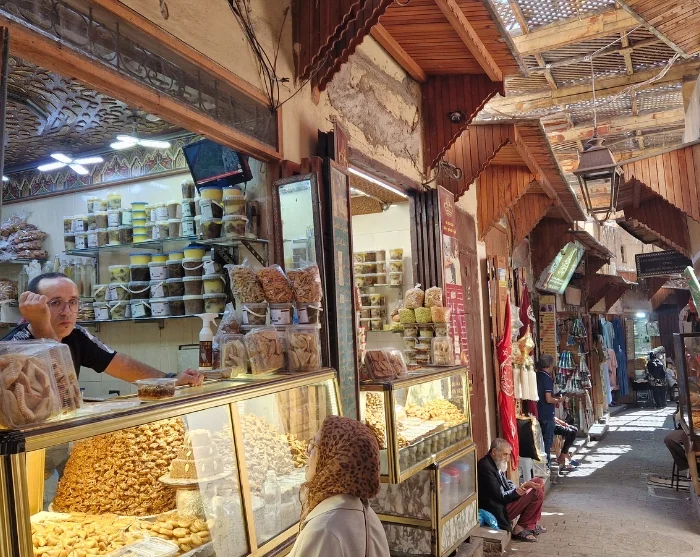
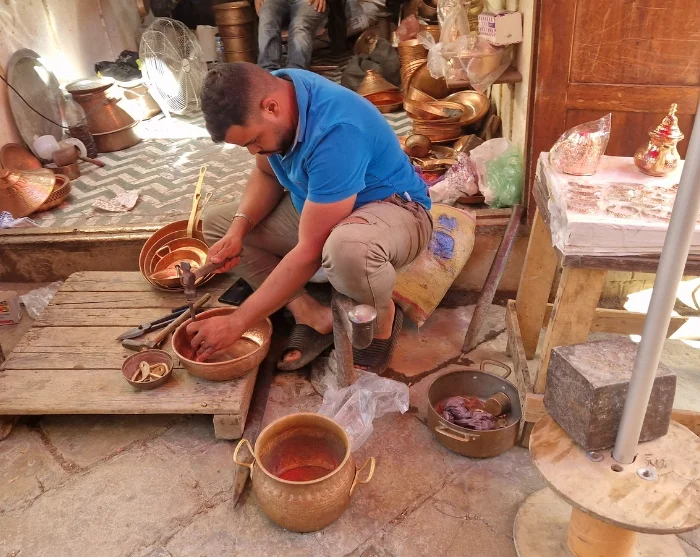
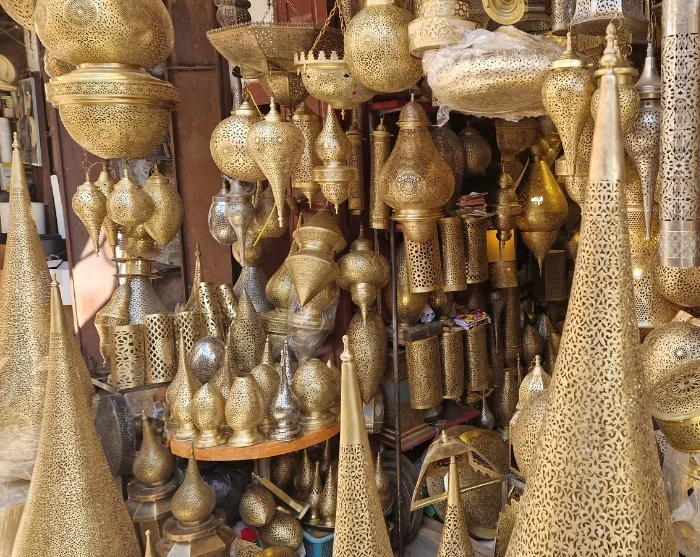
The medina of Fes is enormous. It’s said there are more than 9,000 streets in the old city. Founded in 789, it grew over the centuries to house thousands of people, craftsmen, and traders. Its winding streets form a labyrinthine network arranged according to trades and professions – from carpet workshops and blacksmiths to the famous tanneries. Here, artisans craft leather by hand, following time-honoured traditions. The colourful vats used in the tanning process create a multi-sensory experience unlike any other.
The densely packed houses within the ancient walls, bustling market squares, intimate courtyards, and historic universities, madrasas, and mosques give the medina its remarkable complexity. There’s always somewhere new to discover: a hidden alleyway or a secret passage. History, culture, and local life blend seamlessly here. Some say, perhaps cheekily, that Marrakech’s medina is mostly for visitors – while Fes’ medina is a medina for everyone. Like its counterpart in Marrakech, Fes’ medina can also be found on the UNESCO world heritage list.
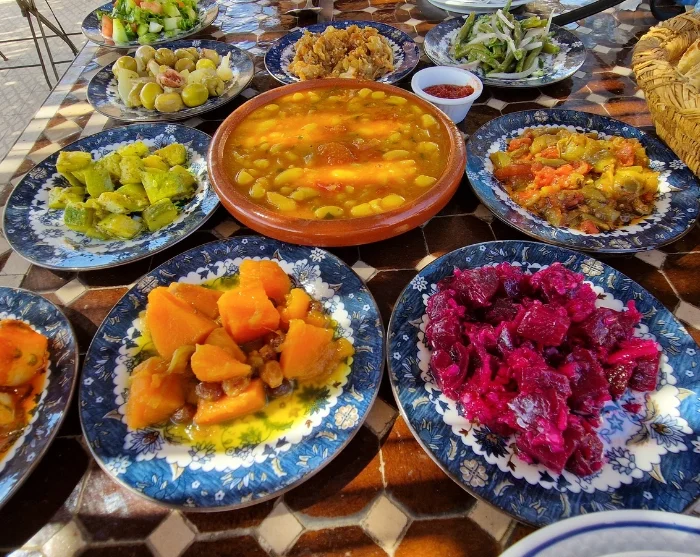
This evening, you’ll enjoy dinner at one of Fes’ many riads.
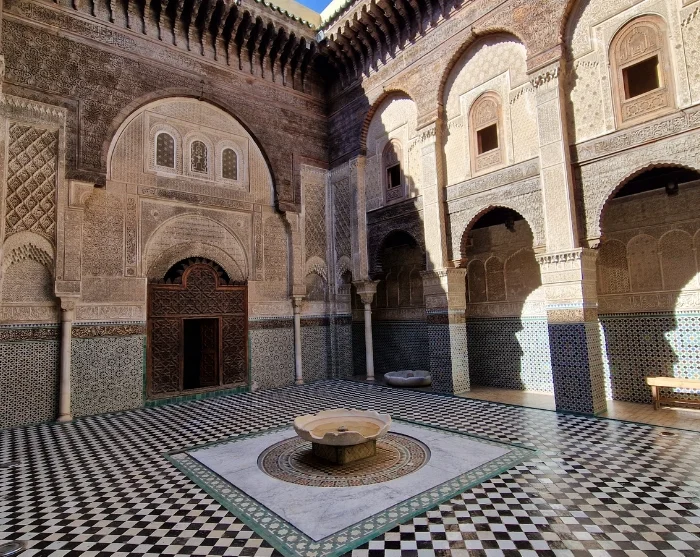
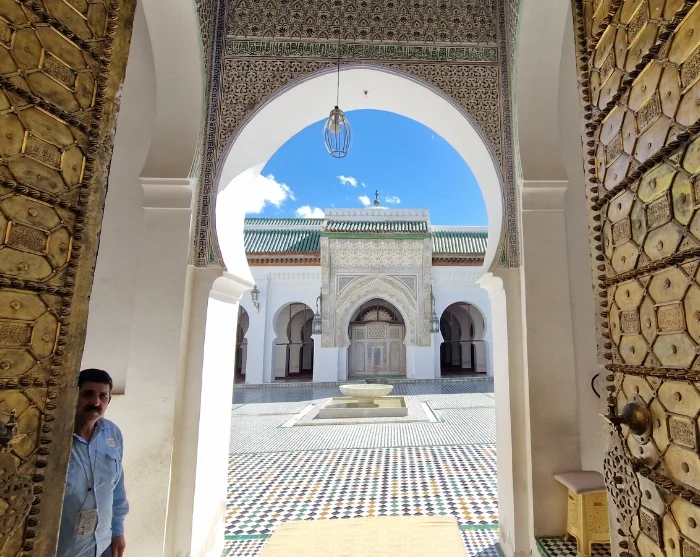
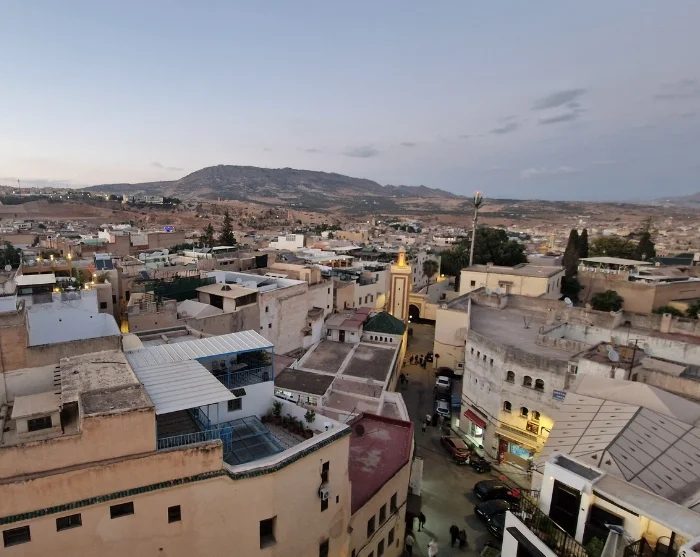
While the ambience of the medina is arguably best experienced on a guided tour right in the heart of the old city, to truly appreciate the labyrinth of thousands of winding streets, you’ll want to take in the view from one of the two hilltop forts – particularly the Northern Fortress, which towers above Fes. This is where your morning’s adventure begins.
No visit to Fes would be complete without seeing the Royal Palace, located just outside the medina. Although it’s not possible to go inside, the grand golden gates are a sight to behold and leave a lasting impression on visitors. They bear witness to both past and present power and wealth, and are among Fes’ most photographed attractions. There are seven gates in total – symbolising the seven heavens in Islam – each one encircled by beautiful blue-green mosaics.
Right behind the palace lies the Jewish quarter, Mellah. The architecture here stands in striking contrast to that of the medina and reflects the diverse cultural heritage of Fes.
This afternoon, you will have the chance to continue exploring Fes at your own pace.
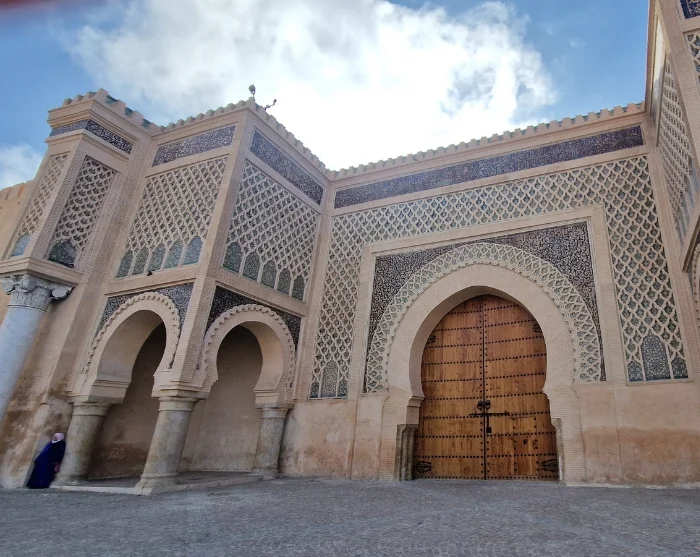
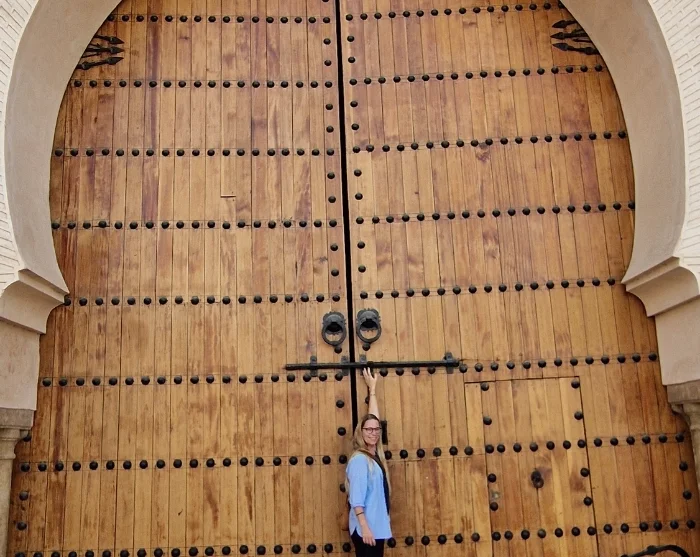
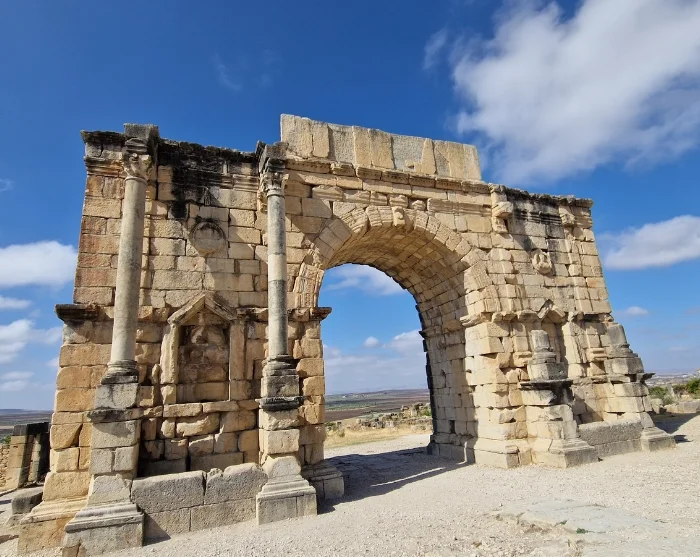
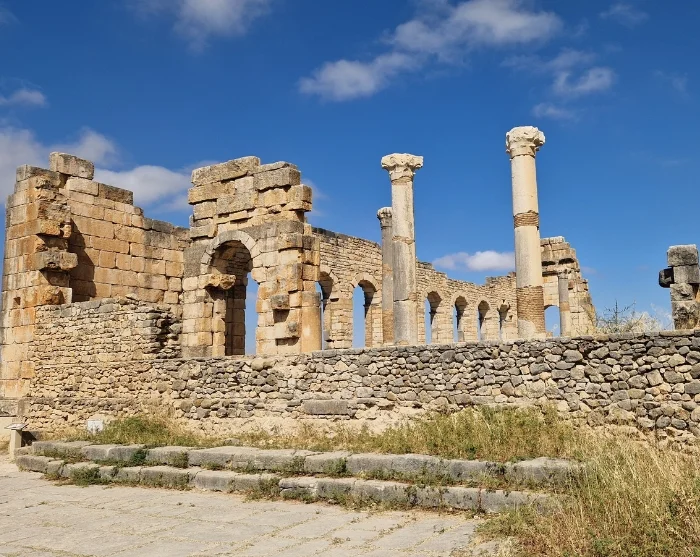
Just over an hour’s drive from Fes, today’s first stop awaits in Meknes. From 1672 to 1727, Meknes served as Morocco’s capital under one of the country’s most notorious rulers: Sultan Moulay Ismaïl.
Moulay Ismaïl is especially remembered for his uncompromising and rather brutal rule over the country – not to mention his astonishing number of wives. Some sources claim he had as many as 500 wives who bore him more than 800 children. While the exact figure may be up for debate, few would disagree that he was a ruthless ruler. One mustn’t underestimate his influence on Meknès’ legacy, either. Moulay Ismaïl had a vision to transform his new capital into Morocco’s answer to Versailles, and during his reign mosques, madrasas, palaces, and more were constructed – the most famous of today is likely the grand Bab Mansour gate.
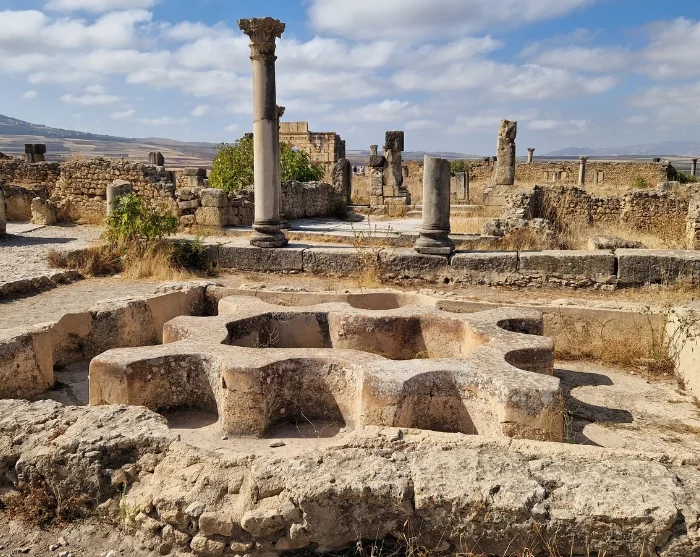
From Meknès, the journey will continue to the impressive Roman ruins of Volubilis, located just over 30 kilometres north of the city. Standing by the “Triumphal Arch” in this former Roman settlement, amidst columns and ancient mosaics, taking in the sweeping views of lush olive groves and fertile fields, it becomes quite clear why the Romans chose this very spot for their city.
Volubilis was added to the UNESCO world heritage list in 1997. Despite Moulay Ismaïl having taken columns from here for his ambitious construction projects in Meknès, and despite the damage caused by the great Lisbon earthquake in 1755, it’s hard not to feel swept up by the echoes of history during your guided tour through these ruins.
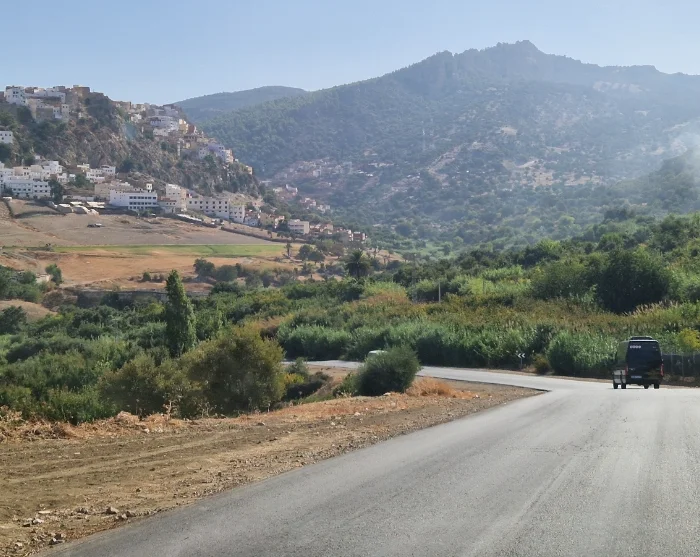
Lunch is enjoyed at a local winery nearby, before the journey continues north. You’ll probably have noticed how the scenery has changed: the arid desert landscape has now given way to olive groves, farmland, and a much greener countryside than you’ve seen in recent days. Near the town of Ouezzane, you will truly enter Morocco’s second great mountain range: the Rif Mountains.
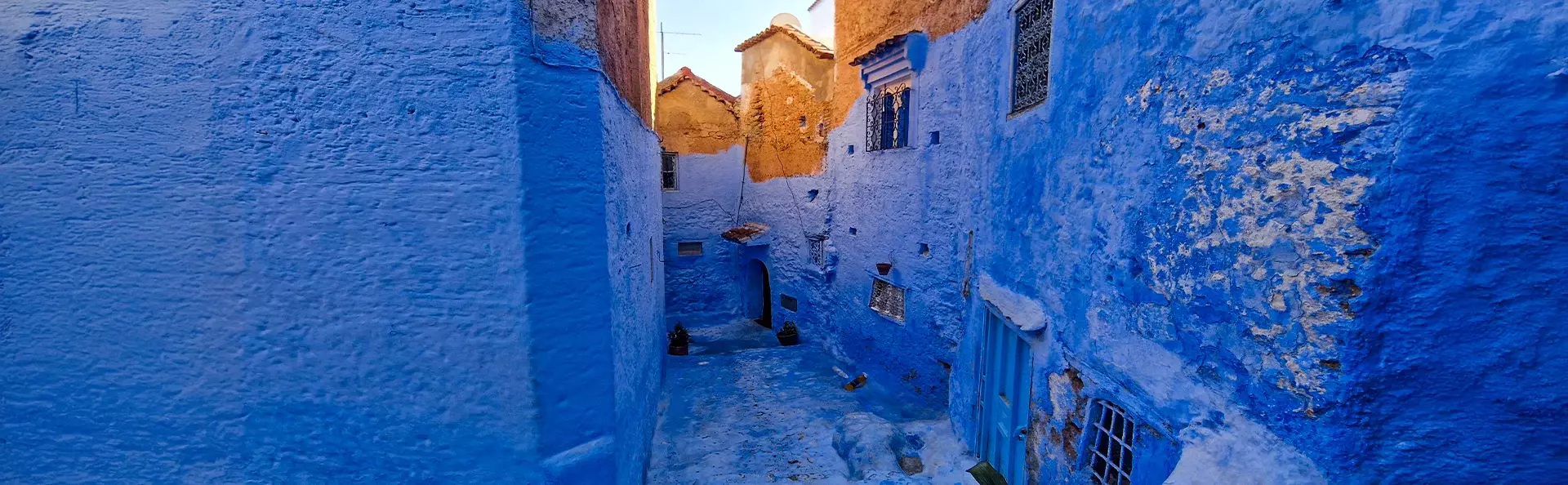
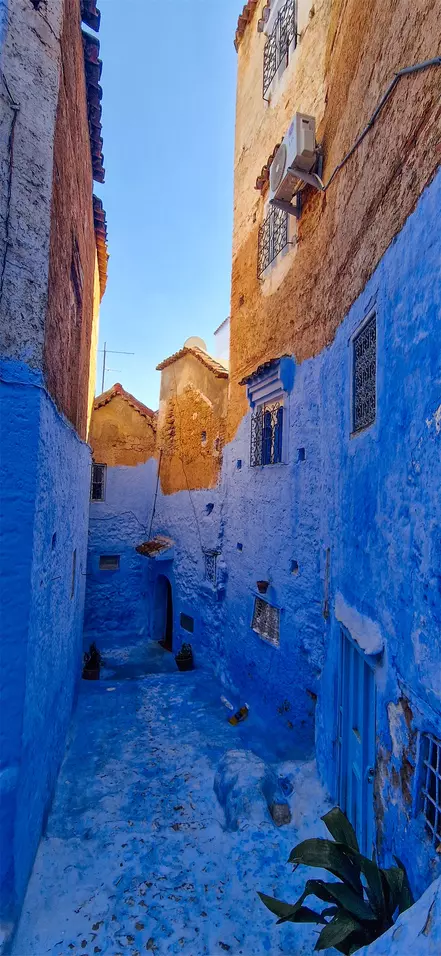
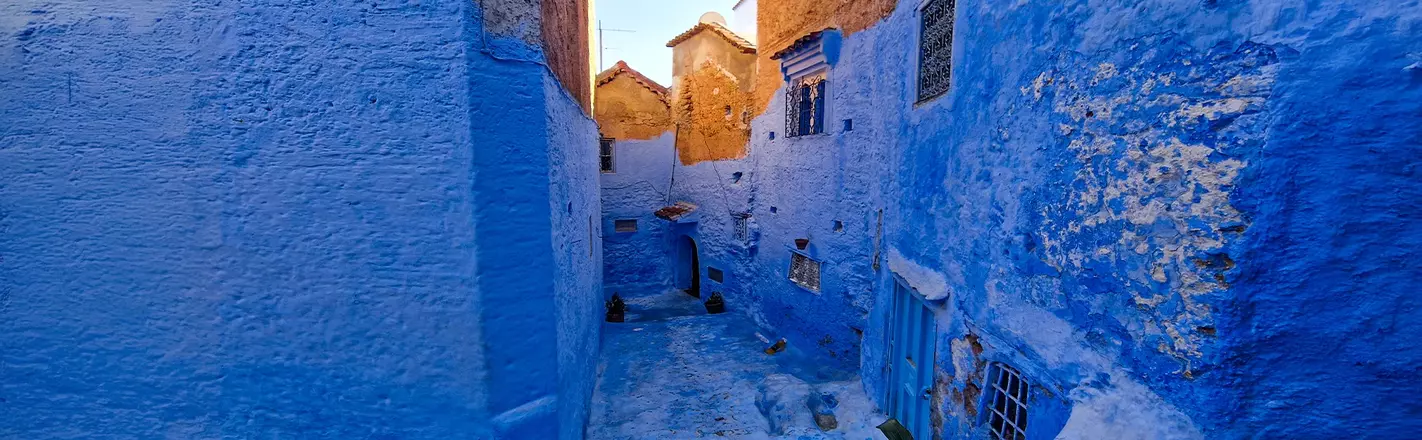
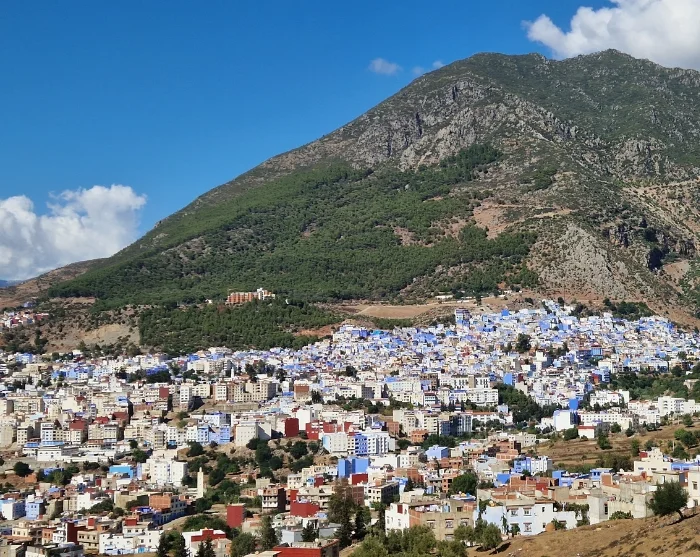
Later in the day, you’ll arrive in Chefchaouen, widely known as the Blue City.
This evening, enjoy dinner at your hotel.
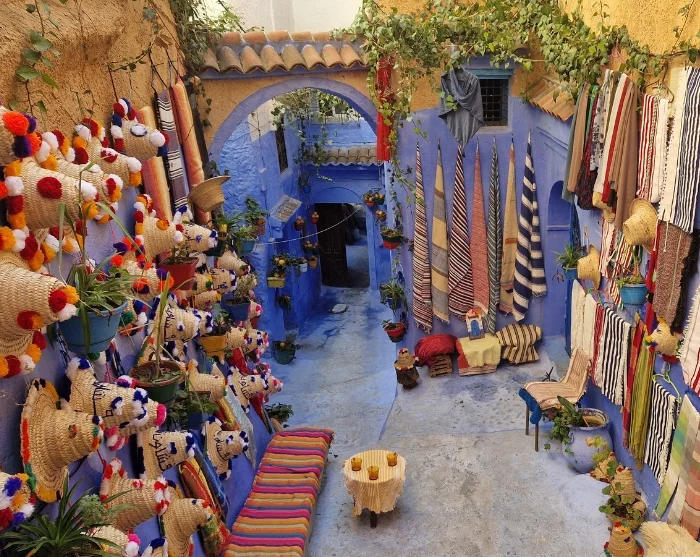
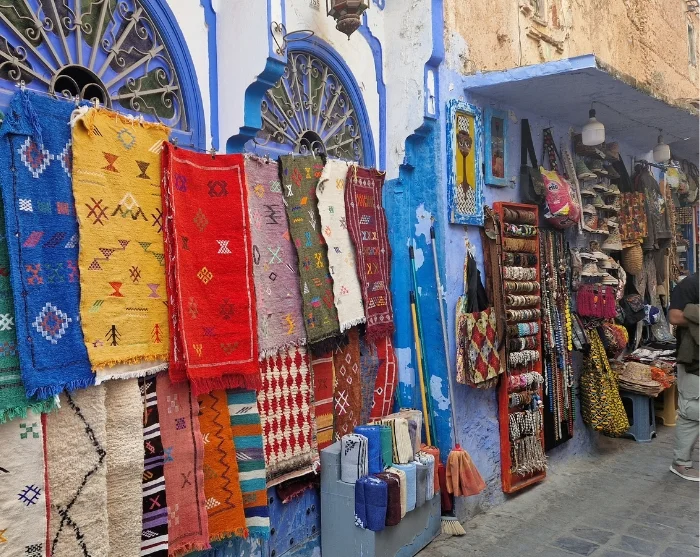
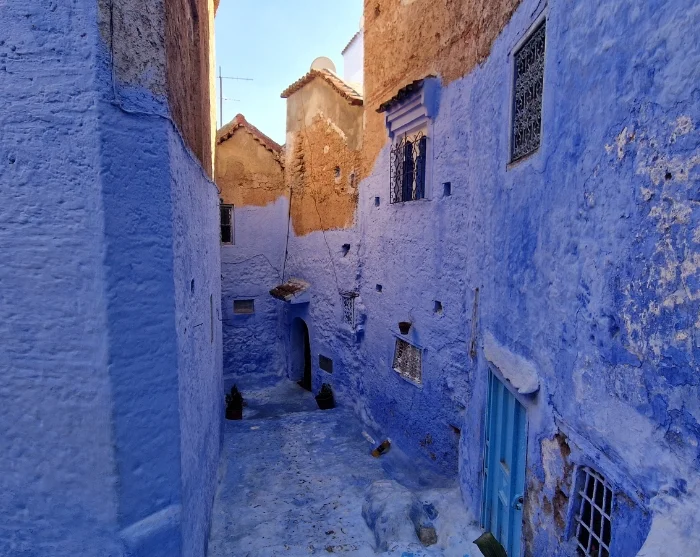
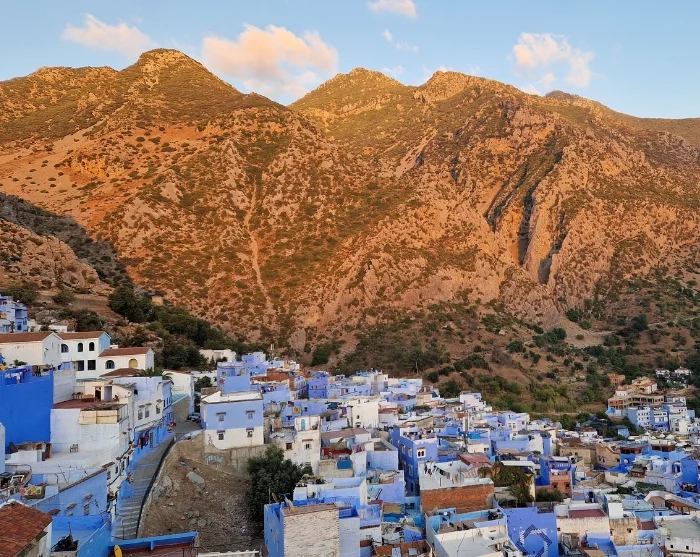
Chefchaouen is an undeniably charming town! It’s easy to find your way around, with its cosy little squares, spectacular viewpoints, and an overall wonderful atmosphere. Your day will begin with a half-day guided city tour, where you’ll learn the fascinating reason behind the abundance of blue houses here.
This afternoon is yours to explore the town’s many winding streets at your own pace. Don’t miss the chance to visit a rooftop terrace at sunset—the light in the late afternoon is truly magical.
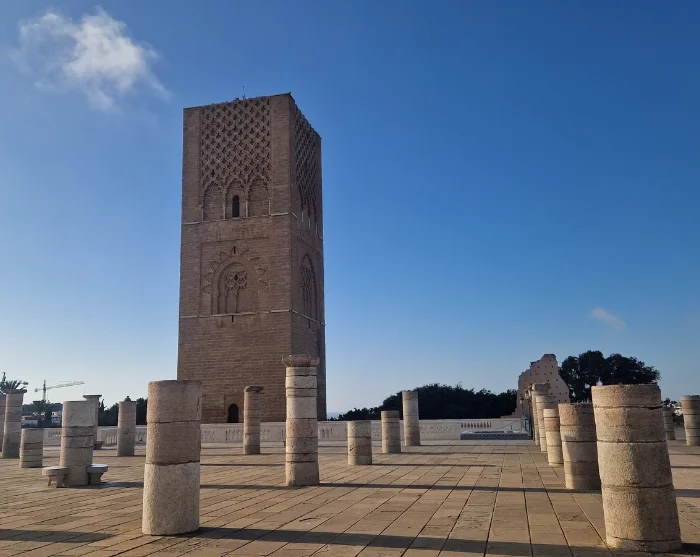
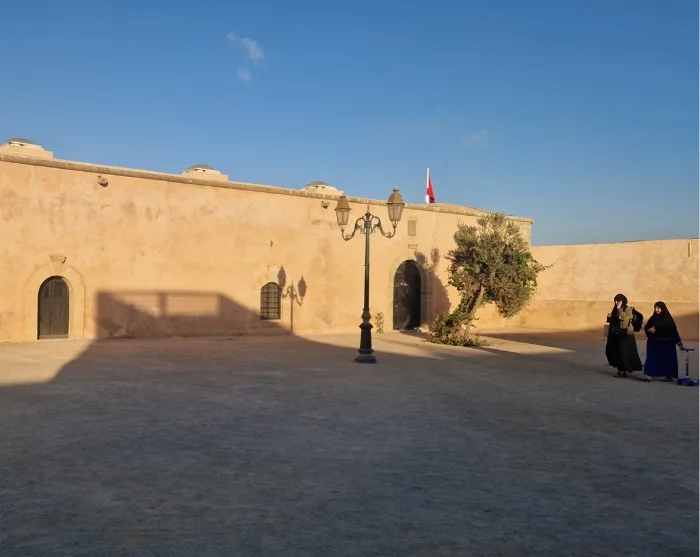
It’s time to bid farewell to the Blue City and set out towards the coast and Morocco’s capital, Rabat. The journey to Rabat takes up the entire morning, so upon arrival, you’ll stop for lunch.
This afternoon, you’ll enjoy a guided tour of the capital, including a visit to the Hassan Tower. The tower is actually a minaret, once intended to be part of the world’s largest mosque. Unfortunately, the caliph Yaqub al-Mansur died in 1199, and the project was never completed. Today, you can still see the pillars and foundations that remain of the ambitious build.
Rabat may come as a pleasant surprise—it’s an incredibly calm city, exuding charm and elegance in equal measure. The medina is easy to navigate and feels much more like a lived-in neighbourhood than a tourist hotspot. Thanks to the Atlantic breeze, the climate remains pleasant all year round.
You’ll spend one night in Rabat.
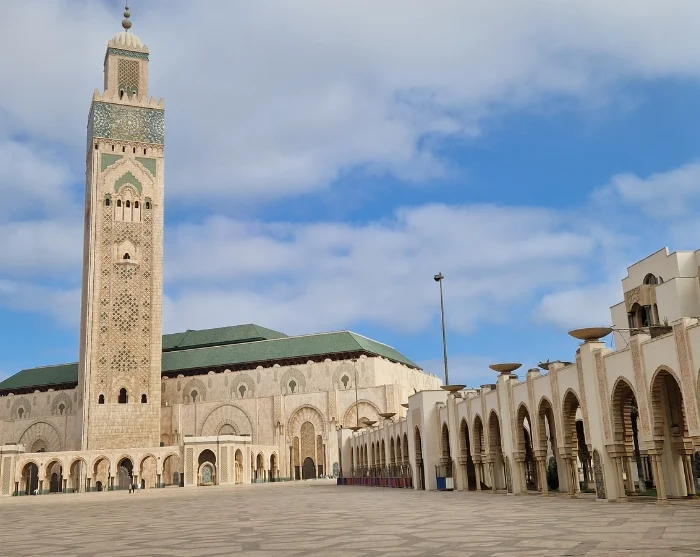
Your tour is nearly complete. This morning, you will set off once again, this time bound for Marrakech. Before you arrive, there’s a chance to stop in Casablanca for lunch and a guided city tour. One of Casablanca’s main highlights is a visit to the Hassan II Mosque, which was inaugurated in 1993. It ranks among the largest mosques in the world, and while its sheer size is impressive, it’s the stunning architecture that will truly take your breath away. Even better—it’s one of the few mosques in Morocco open to non-Muslim visitors.
In the afternoon, you will continue on to Marrakech, where you’ll spend one final night before your tour comes to an end. The rest of the day and evening are yours to enjoy at leisure in Marrakech, a city you’ll already be familiar with from the beginning of your tour.
It’s time to say farewell to Morocco for now. In good time before your departure, you’ll be transferred to the airport for your journey home, with a wealth of experiences (and perhaps quite a few souvenirs) in your luggage!
|
|





Catriona is passionate about helping other people fulfill their travel dreams, as she knows how much travel has only improved her life for the better!
We know your time is precious. That's why we strive to provide personalised, attentive service to ensure your comfort and safety throughout your tour. From the moment you book to the moment you return home, we’re here to handle every detail with the utmost care.
We offer a diverse array of destinations, each promising its own unique story, shaped by its local cultures, fascinating wildlife, and natural beauty.
We design every tour based on the extensive research and first-hand experiences of our travel specialists and experts. Each tour is crafted to showcase the best each country has to offer.
With us, you can rest assured; your journey is in safe hands. We are ATOL certified and a proud member of ABTA, maintaining rigorous standards of quality and service to ensure your complete peace of mind.