Australia is often associated with vibrant cities, red deserts, and friendly locals – but did you know that the country is also home to wildlife so unique that many species are found nowhere else?
Join us on an adventurous tour Down Under as we explore Australia’s wildlife and take a closer look at some of the species that make the country truly special.
Which animals live in Australia?
Australia has been cut off from other continents for almost 30 million years, and that isolation has clearly shaped the country’s wildlife.
Without influence from the rest of the world, Australia’s wildlife has evolved on its own terms, so many animals are found nowhere else on Earth. In fact, the number of distinctive animals in Australia is so high that the country is among those with the highest proportion of endemic species.
The exact number of animal species in Australia is not known, but scientists estimate it lies somewhere between 200,000 and 300,000. Among these, mammals, reptiles, and amphibians are particularly noteworthy, as around 90% are found only in Australia and are therefore unique to the continent.
Are there dangerous animals in Australia?
Yes, there are dangerous animals in Australia. And it’s something that’s on many people’s minds when they’re planning a tour to Australia. In reality though, it rarely affects your tour.
Although you might encounter anything from tiny mosquitoes to large crocodiles, snakes, jellyfish, and spiders, the risk of it becoming a problem on your tour is very small. The Australian authorities make a huge effort to keep both locals and visitors safe through clear signage, thorough information, and comprehensive safety measures.
A few simple tips and a bit of common sense go a long way:
Wear closed shoes: It’s a good idea to protect your feet and watch where you step when you’re exploring nature.
Keep your distance: You should always keep a safe distance from animals you encounter in the wild, and avoid touching them.
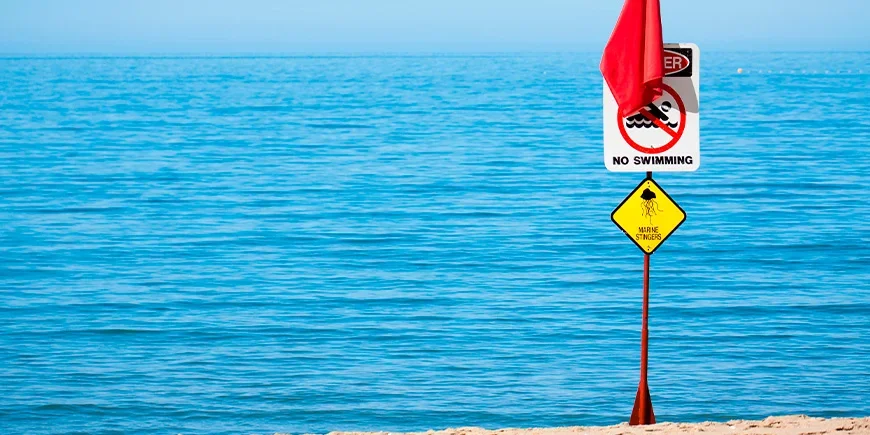
Take care around the water: In certain areas, there may be a risk of both sharks and stingers (such as box jellyfish and Irukandji), but by swimming at the recommended beaches and following the signage, you can stay safe.
Below, you can read about some of the animals you might encounter in Australia, from a few dangerous species to the many harmless creatures that call the country home.
10 animals you can encounter in Australia
Australia is home to an incredible array of fascinating wildlife. We’ve selected 10 intriguing animals you can encounter in the country – some you’ll be keener to meet than others.
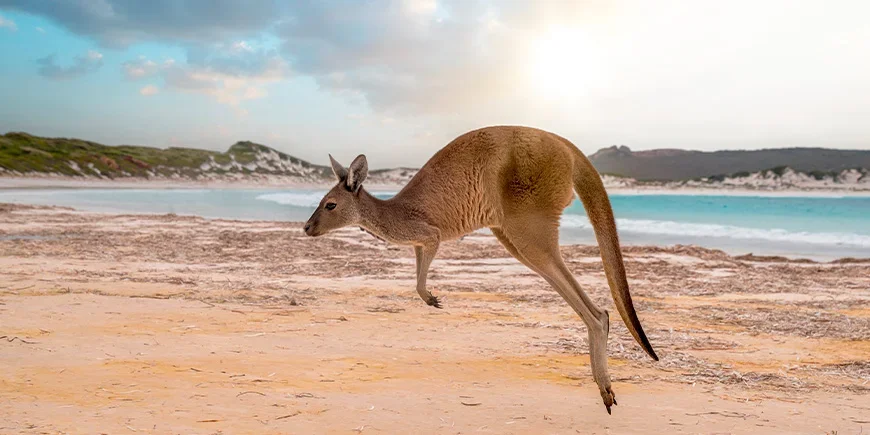
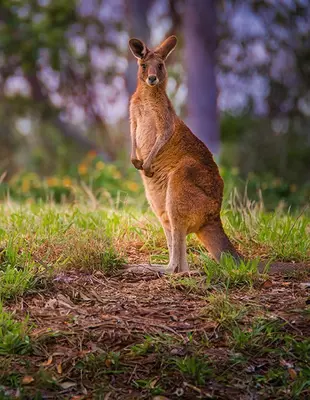
1. Kangaroo – Australia’s national animal
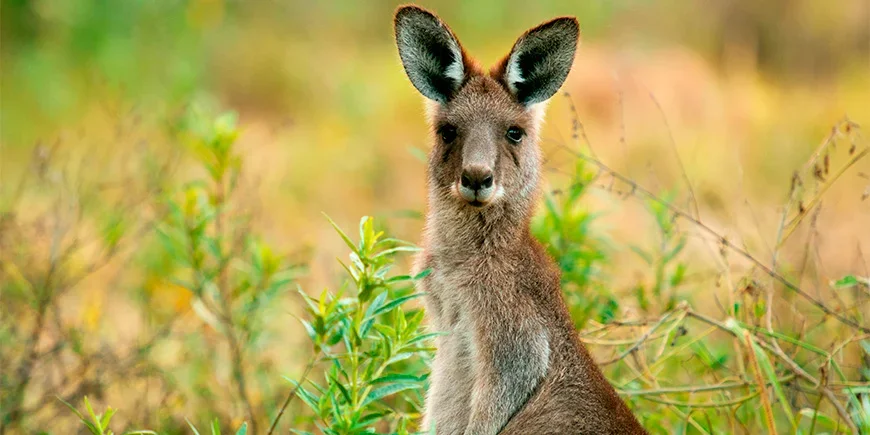
For many, the kangaroo is probably the first thing that springs to mind when the conversation turns to Australia’s wildlife. So it’s little wonder that the kangaroo has the honour of being Australia’s national animal.
If you’re not from Australia, it’s easy to assume all kangaroos are the same – but that couldn’t be further from the truth. In fact, Australia boasts no fewer than 60 different species of kangaroo, ranging from the red kangaroo, which is taller than an adult man, to the musky rat-kangaroo, which is typically no bigger than a rabbit.
Kangaroos are widespread across much of Australia, especially in arid regions with open plains. Venture into these parts of the country and the chance of not seeing kangaroos bounding past with their tiny joeys tucked in their pouches is virtually non-existent.
Something you might not know about the kangaroo: There are more kangaroos than people in Australia, making them one of the country’s most common animals (but remember to keep a safe distance, as they can kick).
2. Saltwater crocodile – one of the planet’s oldest creatures
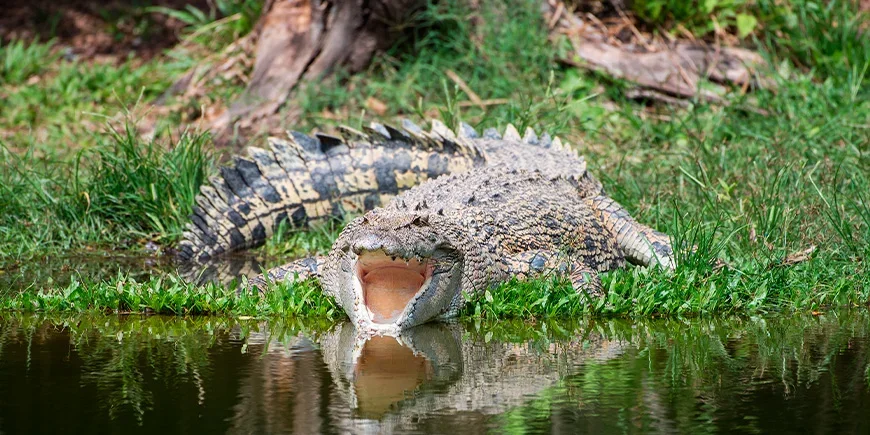
You can hardly talk about Australia’s wildlife without mentioning the country’s most beloved wildlife expert, the late Steve Irwin. Although he cared deeply for all animals, one was especially close to his heart: the saltwater crocodile, affectionately nicknamed “salties”.
As the world’s largest living crocodile, the saltwater crocodile is truly a magnificent animal. Males average 5.7 metres in length, but specimens reaching 7.2 metres are not uncommon – about half the length of a typical city bus.
This majestic creature sits at the top of the food chain and eats anything it can get hold of. Its prey often include fish, birds, and small reptiles, but it will also take on larger animals such as sharks.
Something you might not know about the saltwater crocodile: The saltwater crocodile dates back to the age of the dinosaurs, making it one of the oldest creatures ever to have lived on Earth.
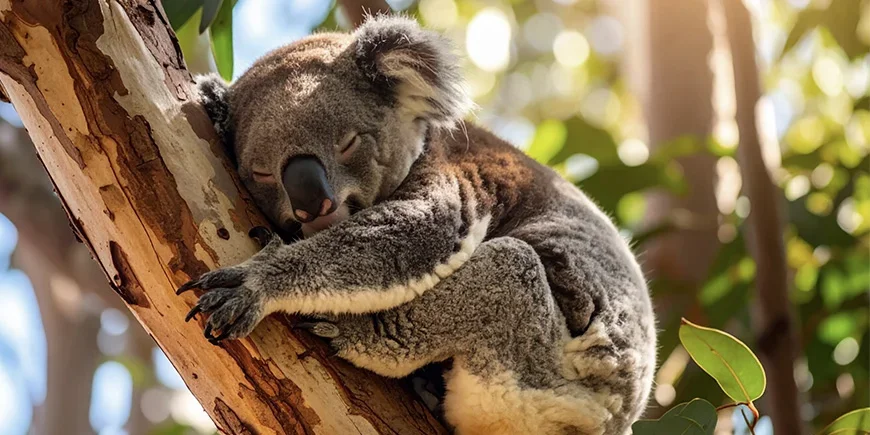
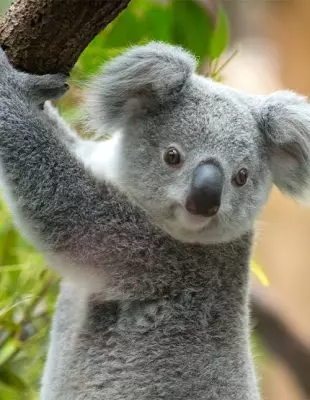
3. Koala – Australia’s cutest animal
We can all agree there are plenty of cute animals in Australia. But one in particular tops the cuteness charts: the koala.
With its grey fur, fluffy ears, and large nose, it’s hard not to fall in love with this adorable little fellow, which spends most of its time dozing in a eucalyptus tree – the koala eats only eucalyptus leaves, which are so low in energy that it often sleeps for up to 22 hours a day to conserve energy.
Although there used to be many koalas in Australia, sadly the reality today is different, as bushfires in Australia and the clearing of eucalyptus forests have made the koala a threatened species.
Something you might not know about the koala: These fluffy animals are often called ‘koala bears’, but don’t be fooled. A koala isn’t a bear at all, but a marsupial.
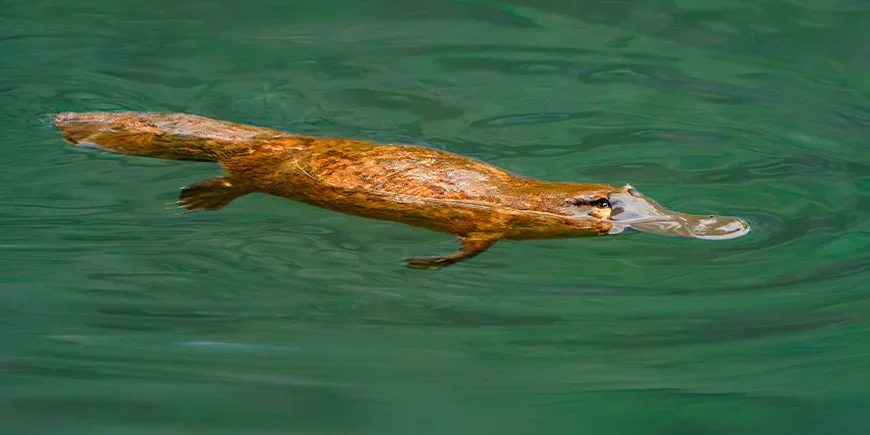
4. Platypus – one of nature’s astonishing wonders
With its looks somewhere between a beaver and a duck, the platypus surely ranks among Australia’s oddest creatures – so odd, in fact, that scientists thought it was a hoax when they examined the first specimen.
With its beaver-like tail and webbing between its toes, the platypus is an excellent swimmer, spending much of its time in the water hunting for food. When it isn’t on the hunt, the platypus retreats to a cosy little burrow it has dug by the water’s edge.
Something you might not know about the platypus: Although platypuses look cute and cuddly, you shouldn’t get too close – the males can deliver venom from spurs on their hind legs, which can be extremely painful.
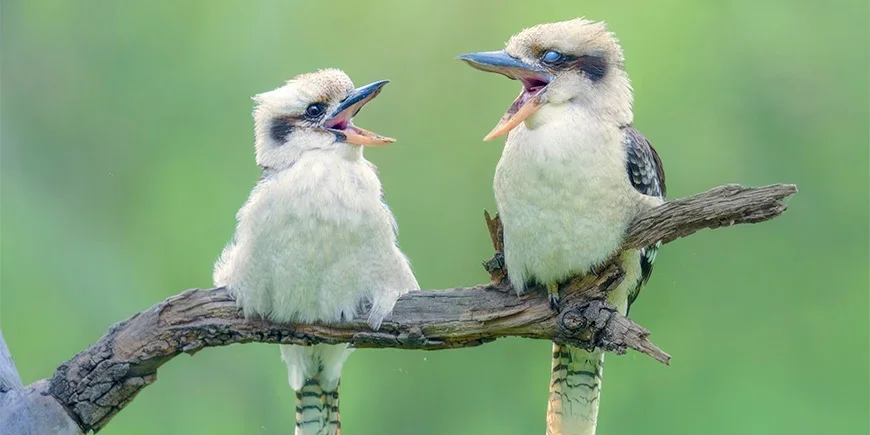
5. Kookaburra – the bird with the iconic laugh
If you’re strolling through the Australian bush and suddenly hear an odd cackle, it’s almost certainly a kookaburra you’ve come across.
The kookaburra, one of the larger members of the kingfisher family, is known for its distinctive “koo-koo-kaa-kaa”, which gave the bird its name. The sound, easily mistaken for laughter, is in fact a territorial call.
Although the kookaburra isn’t a big bird, it’s anything but timid and doesn’t limit itself to worms and insects for lunch – it also hunts snakes. Its reputation as a snake-killer is probably the reason why the bird, originally from eastern Australia, was deliberately introduced to other parts of the country.
Something you might not know about the kookaburra: Once a kookaburra has found a mate, the pair typically stay together for life – a true love story from the wild.
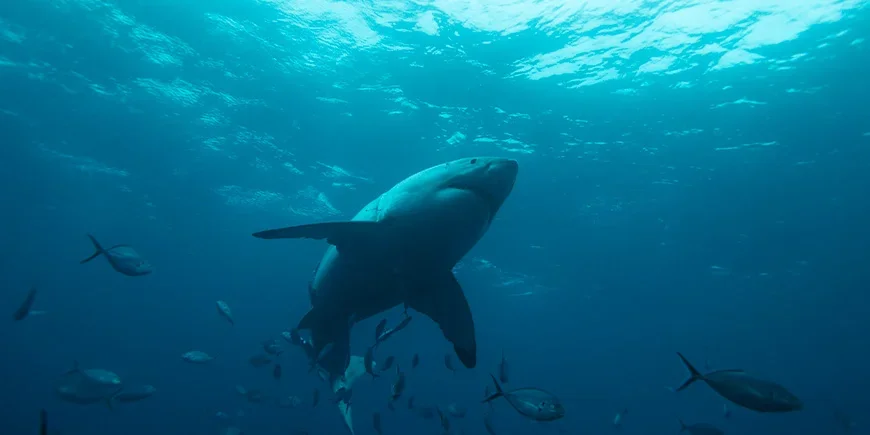
6. The great white shark – one of the ocean’s largest (and most feared) predators
Da-dum, da-dum, da-dum. In the iconic thriller “Jaws”, those notes signal that the dark shape in the water isn’t a playful dolphin popping by to say hello – but a great white shark gliding steadily toward you.
The great white shark, named for its white underside, ranks among the world’s largest predatory fish and is one of many shark species that naturally inhabit Australian waters. With a mouth lined with more than 300 razor-sharp teeth and reaching lengths of up to 6 metres, the sight of a great white is both awe-inspiring and fascinating.
Over time, the great white has earned a fearsome reputation it doesn’t entirely deserve. Attacks on people are rare, and the Australian authorities actively monitor conditions, close beaches when necessary, and provide clear safety advice, so you can enjoy the beaches with a peace of mind.
Something you might not know about the great white shark: Although many associate the great white with fear, paradoxically it’s humans who pose its greatest threat.
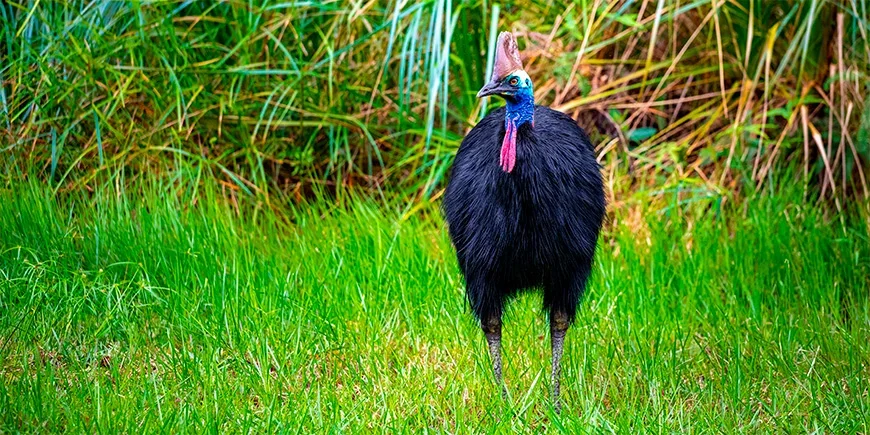
7. Cassowary – the world’s most dangerous bird
”What is that strange ostrich?” This is probably the first thing many people think when they see a cassowary.
Although the two birds are related and therefore share several traits – e.g. long legs, a large build, and an inability to fly – there are also a number of differences. One of the most obvious is the difference in colour. The cassowary’s neck isn’t white like the ostrich’s; it is instead a beautiful blend of blue, turquoise, orange, and red.
Its colourful neck, however, isn’t the only thing that makes the cassowary easy to recognise. On its head, the bird also sports a distinctive casque, which it uses like a shovel to turn over loose soil.
Something you might not know about the cassowary: The cassowary has been named the ‘world’s most dangerous bird’ by Guinness World Records, which comes as a surprise to most. The colourful bird isn’t naturally aggressive, but it may attack if it feels threatened, and over the years, this has cost two people their lives.
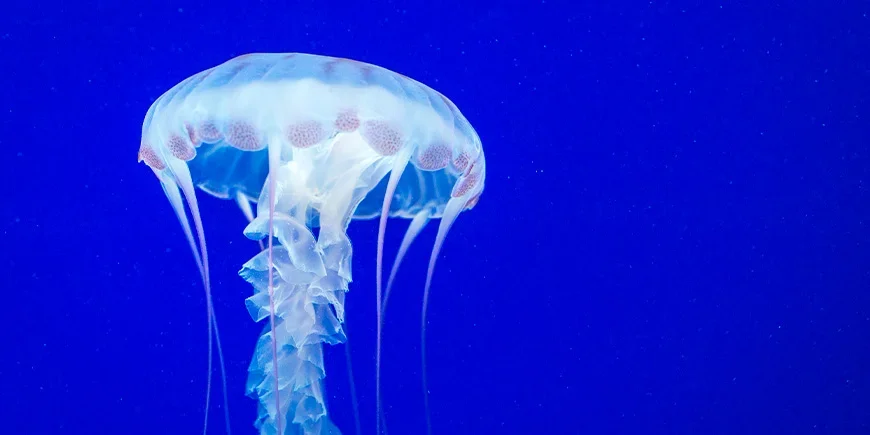
8. Stingers – the fascinating yet venomous jellyfish
At first glance, the small, jelly-like creature can easily be mistaken for the jellyfish you know from European waters – perhaps one you’ve even held in your hand. But in Australia, you need to be careful. Although stingers may look beautiful and harmless, many are venomous and should never be touched.
There is a risk of stingers (including box jellyfish and Irukandji) all year round in northern Australia – including northern Queensland, the Northern Territory, and northern Western Australia – but the risk is highest during the warm season (roughly October/November to May/June).
Even though stingers are venomous, you don’t have to stay out of the sea in Australia. Local authorities work hard to keep swimmers safe by putting up stinger nets and clearly marking safe swimming areas.
Please note that stinger nets do not protect against Irukandji, so always follow signage and local advice (e.g. wear a stinger suit).
Something you might not know about stingers: One of the most dangerous stingers, the Australian box jellyfish has tentacles that can grow to around 3 metres long.
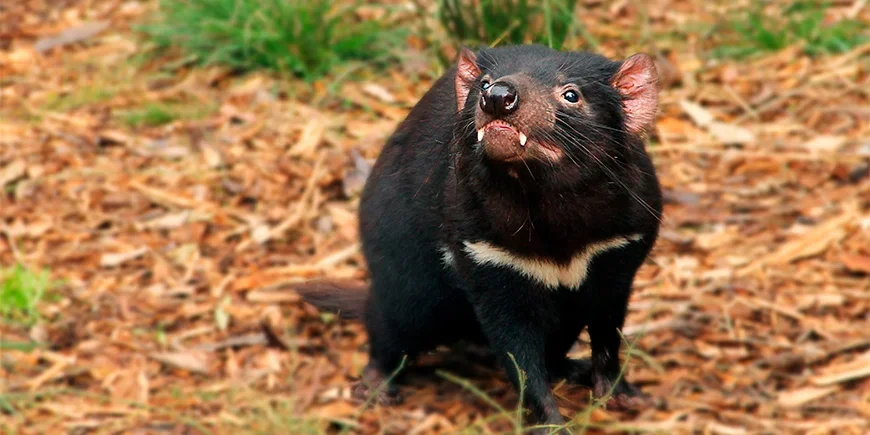
9. Tasmanian devil – the animal with an eerie scream
You might wonder how such a small animal could have such a fearsome name – but that’s no coincidence.
And no, it isn’t the animal’s sharp fangs and powerful bite that are to blame, but rather its eerie scream that sends shivers down your spine. When the first Europeans arrived in Tasmania, they believed the sound came from demons hiding in the bush.
Although it’s thought that the Tasmanian devil once lived in large numbers on the Australian mainland, for millennia it has survived only in Tasmania. In recent years, however, conservation groups have been working to reintroduce the animal to the Australian mainland.
Something you might not know about the Tasmanian devil: Among mammals, the Tasmanian devil has the strongest bite of any mammal relative to its size.
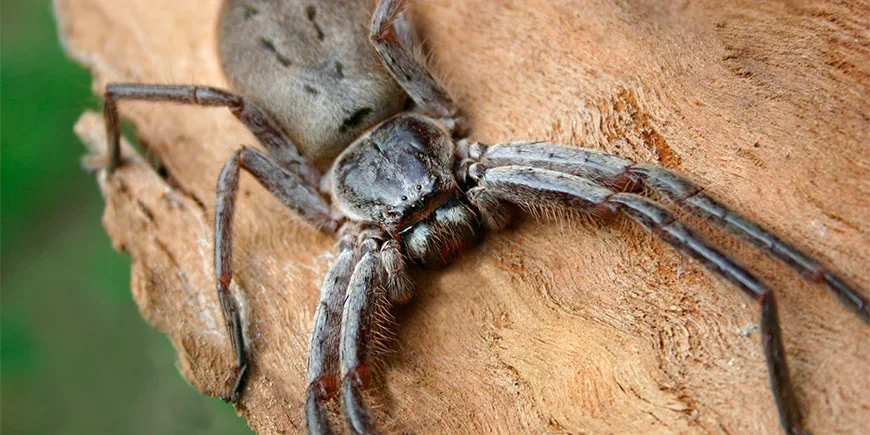
10. Huntsman spiders – the giant among spiders
If you know anything about Australia, you’ve probably heard there are rather a lot of spiders – and some of them are quite a bit bigger than the ones you’re used to back home.
Among the true giants you might encounter in Australia are huntsman spiders, whose legs can reach up to 15 cm. This species is widespread in Australia and likes to hide beneath bark, logs, and stones.
Huntsman spiders are proof that you shouldn’t judge a book by its cover. Although they look frightening, they’re not dangerous to humans. Because they’re large, fast, and have a tendency to leap, they can still be a rather unnerving house guest.
Something you might not know about the huntsman spider: Huntsman spiders don’t spin webs to catch food; instead, they hunt and ambush their prey.
Want to experience Australia’s wildlife?
Whether you dream of seeing kangaroos, koalas, or some of Australia’s rarer – and at times dangerous – animals, a fascinating world of wildlife awaits you.
Would you also like the chance to get up close to (some of) Australia’s wildlife? Get in touch with our experienced travel specialists and let us help you find the perfect tour to Australia.
Discover Australia’s amazing contrasts. From the country’s two largest cities Melbourne and Sydney to the red desert and Uluru. Round off in tropical Cairns and visit the Great Barrier Reef or the world’s oldest rainforest.
The absolute classic Australia tour with city experiences in Sydney, a visit to Uluru in the red heart of Australia, and tropical Cairns with the possibility of experiencing the Great Barrier Reef and the world’s oldest rainforest.
Discover Australia’s 3 largest cities, Brisbane, Sydney and Melbourne. Spice up the tour with excursions and get right up close to nature, culture and history while making the most of the city comforts.
Travel to Australia in your summer holiday. The climate in the northern part of the country is perfect, with warm days, cool nights and low humidity. In Sydney, you may be lucky enough to see some whales!
The grand tour is for those wishing to see it all in one go! It offers a whole host of experiences – and plenty of freedom to put your own mark on the tour to make it just the way you want it.
Look forward to making a stop in fabulous Singapore, before continuing to the amazing contrasts of Australia. Melbourne, Sydney and the red desert await you Down Under, before the tour rounds off in tropical Cairns.
Start out with a couple of days in the vibrant metropolis of Singapore before the tour continues Down Under. Look forward to beautiful Sydney, a visit to Uluru in the red heart of Australia, and tropical Cairns. Option to extend the tour to include a beach holiday or national park experiences.
Come on a self-drive adventure along one of the world’s most scenic stretches of coastline, the Great Ocean Road. Experience the country’s two largest cities, Melbourne and Sydney, the endless red desert with Uluru, and round off with relaxation in tropical surroundings in Cairns.
Discover Sydney and Brisbane followed by a self-drive tour on Australia’s east coast. Look forward to sights such as the world’s largest sand island, K’gari, the scenic Whitsunday Islands National Park and the beach resort of Port Douglas.
Your adventure begins in New Zealand, immersing you in Maori culture, geothermal wonders, mountain lakes, and glaciers, before continuing on to Australia. Here, you’ll experience the vibrant city of Sydney, the striking red outback at Uluru, and finish your journey in tropical Cairns.
Discover Australia’s amazing contrasts. From the country’s two largest cities Melbourne and Sydney to the red desert and Uluru. Round off in tropical Cairns and visit the Great Barrier Reef or the world’s oldest rainforest.
The absolute classic Australia tour with city experiences in Sydney, a visit to Uluru in the red heart of Australia, and tropical Cairns with the possibility of experiencing the Great Barrier Reef and the world’s oldest rainforest.
Discover Australia’s 3 largest cities, Brisbane, Sydney and Melbourne. Spice up the tour with excursions and get right up close to nature, culture and history while making the most of the city comforts.
Travel to Australia in your summer holiday. The climate in the northern part of the country is perfect, with warm days, cool nights and low humidity. In Sydney, you may be lucky enough to see some whales!
The grand tour is for those wishing to see it all in one go! It offers a whole host of experiences – and plenty of freedom to put your own mark on the tour to make it just the way you want it.
Look forward to making a stop in fabulous Singapore, before continuing to the amazing contrasts of Australia. Melbourne, Sydney and the red desert await you Down Under, before the tour rounds off in tropical Cairns.
Start out with a couple of days in the vibrant metropolis of Singapore before the tour continues Down Under. Look forward to beautiful Sydney, a visit to Uluru in the red heart of Australia, and tropical Cairns. Option to extend the tour to include a beach holiday or national park experiences.
Come on a self-drive adventure along one of the world’s most scenic stretches of coastline, the Great Ocean Road. Experience the country’s two largest cities, Melbourne and Sydney, the endless red desert with Uluru, and round off with relaxation in tropical surroundings in Cairns.
Discover Sydney and Brisbane followed by a self-drive tour on Australia’s east coast. Look forward to sights such as the world’s largest sand island, K’gari, the scenic Whitsunday Islands National Park and the beach resort of Port Douglas.
Your adventure begins in New Zealand, immersing you in Maori culture, geothermal wonders, mountain lakes, and glaciers, before continuing on to Australia. Here, you’ll experience the vibrant city of Sydney, the striking red outback at Uluru, and finish your journey in tropical Cairns.
...26 daysFrom £%s
General Info
Latest articles
Vietnam with kids: guide to an unforgettable family holiday