Canada is a country where nature reigns supreme, and wildlife thrives amidst its boundless forests, mountains, and rivers.
Among the incredible creatures you can encounter here is the bear – the mighty ruler of the Canadian wilderness, whose very presence is both awe-inspiring and formidable.
Read on as we delve into the world of these fascinating animals and share our tips on how you can experience them in the wild in the safest and most memorable way possible.
Canada – The ultimate destination for bear encounters
With their powerful muscles, thick fur, and sharp teeth, bears are truly awe-inspiring creatures – and for many of us, catching a glimpse of one in the wild is a lifelong dream.
This majestic animal comes in a variety of shapes and sizes and makes its home in a wide range of habitats around the world. One of the best places to see some of the largest bear species is in Canada, where vast wilderness and cool temperatures create ideal conditions for around 600,000 black bears, 20,000 grizzly bears, and 17,000 polar bears.
Canada is, without doubt, a true paradise for anyone hoping to encounter these amazing animals up close.
Which bear species can you spot in Canada?
There are eight different bear species worldwide, and Canada is home to three of them: the black bear, the grizzly bear, and the polar bear. While they share certain similarities, these bears differ greatly in terms of habitat, lifestyle, and behaviour.
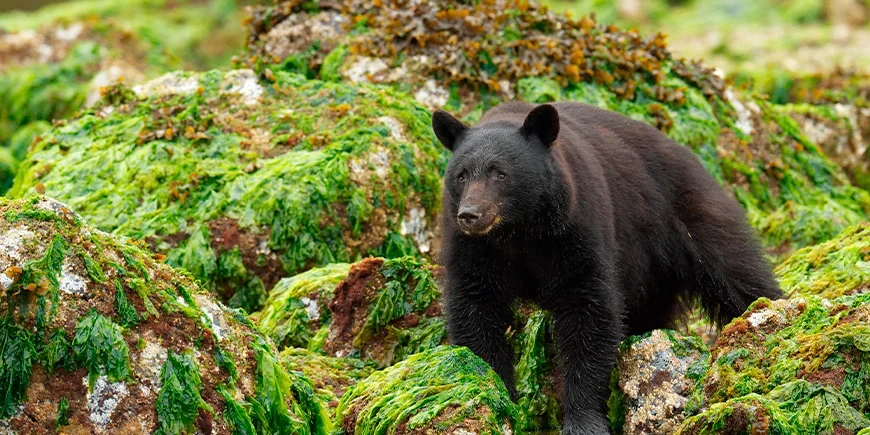
Black bears – the elusive shadows of the forest
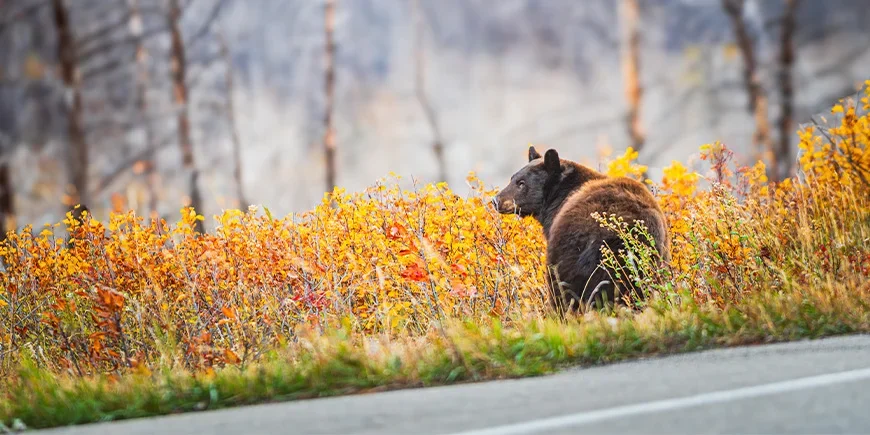
The black bear, which is featured on the list of Canada’s Big Five (alongside the polar bear, moose, bison, and beluga whale), is the most common species of bear in Canada.
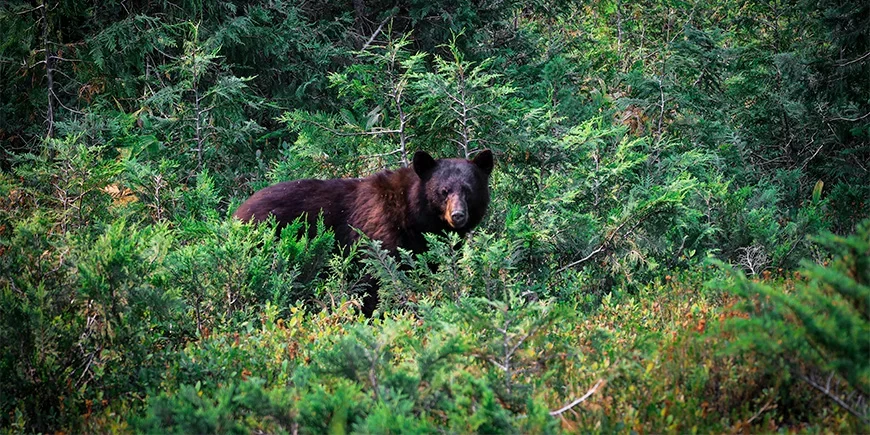
Contrary to what the name suggests, not all black bears are, in fact, black. The variations in colour are due not only to natural differences, but also because there are 16 distinct subspecies of black bear. This gives rise to an impressive range of colours – from black, grey, and brown, as well as to pure white bears.
The black bear’s preferred habitat is the forest. It is an excellent climber and is frequently seen resting high up in the branches of trees when not foraging for food on the ground.
The best places to see black bears: the Canadian Rocky Mountains, for example in Banff and Jasper National Parks. However, you can spot black bears in nearly every province and territory across Canada.
Grizzly bears – the iconic giants of the West
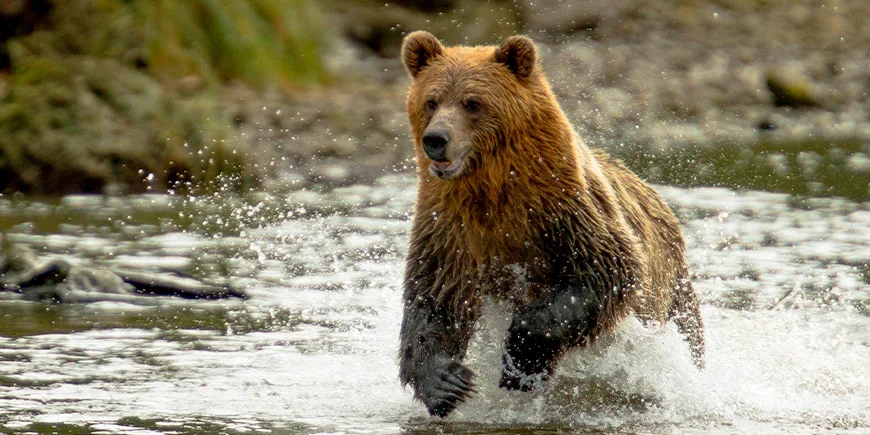
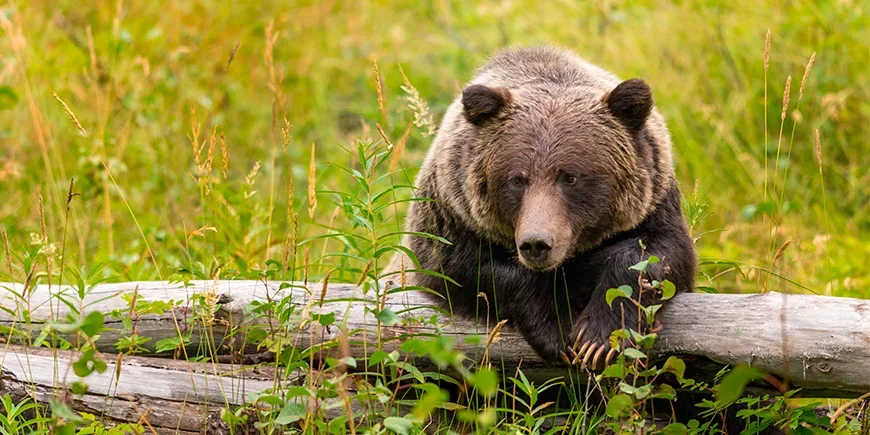
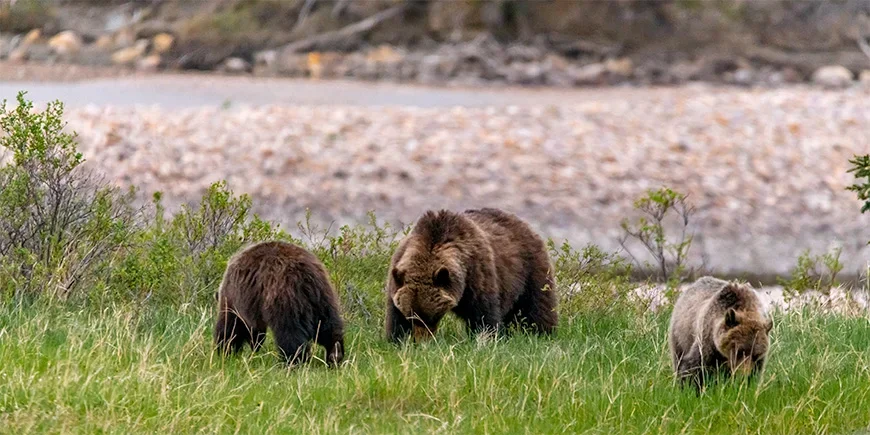
The grizzly bear is a subspecies of the brown bear, which can be found in North America, Europe, and Asia. It is easily recognised by its brown fur, often tinged with grey hues. That’s actually how the bear got its name—‘grizzly’ meaning grey-streaked.
Once upon a time, grizzly bears roamed nearly all of western North America, stretching from Alaska in the north to Mexico in the south. However, because grizzly bears require vast areas of territory, the species was pushed to the brink of extinction in the early 1900s, as the expansion of European settlers threatened their natural habitats.
In 1975, grizzly bears were officially classified as a threatened species, a decision that helped to reverse their decline. Since then, their numbers have risen significantly.
The best places to encounter grizzly bears: in the Canadian Rocky Mountains, for example in Banff and Jasper National Park.
Polar bears – rulers of the arctic tundra
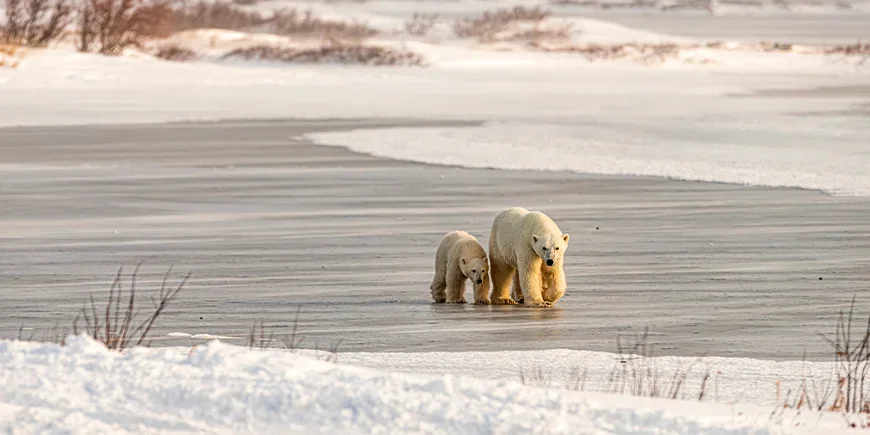
The polar bear, instantly recognisable by its striking white fur, is the largest bear species in the world and can reach heights of up to 2.8 metres. It comes as no surprise, then, that this impressive predator is counted among Canada’s Big Five.
Canada is home to more than two-thirds of the world’s entire polar bear population. These majestic creatures are predominantly found along the icy coastal regions of northern Canada, where they hunt seals. However, they can also be spotted as far south as James Bay in Ontario, home to the southernmost polar bear population on the planet.
Because sea ice is such a vital hunting ground and habitat for polar bears, climate change—which is causing the ice to melt—poses a severe threat to their survival. Polar bear numbers are in decline, and the future of the species hangs in the balance.
The best place to see polar bears is: Churchill, a town located in the north-western part of the Manitoba province.
Essential facts and tips about bears
Encountering wildlife—especially powerful carnivores like bears—not only makes for an unforgettable experience but also raises plenty of questions for most travellers.
That’s why we’ve put together a list of the most frequently asked questions about bears, including where, when, and how to best experience them in the Canadian wilderness.
Are bears dangerous?
In certain cases, yes. Bears are generally peaceful and solitary creatures who tend to keep to themselves. As a result, attacks on humans are rare, and when they do occur, it’s usually due to human error.
However, if a bear does become aggressive, it can be extremely dangerous. This is particularly true in spring, when bears emerge from their winter hibernation. At this time of year, bears are often ‘hangry’—a mix of hunger and irritability that most of us recognise—because they haven’t eaten for months. Many will also be protecting a new litter of cubs, making them even more defensive.
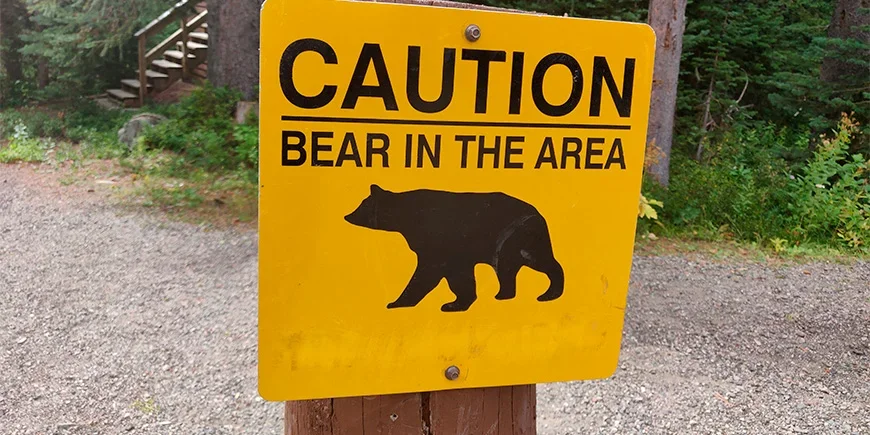
Bears can be unpredictable, and it is never possible to say with certainty when you might get too close or unintentionally provoke them. For this reason, it is always advisable to show respect and exercise caution whenever you encounter a bear.
What should you do if you encounter a bear?
Meeting a bear is always a unique experience, influenced by many different factors. There is no single approach that will work and guarantee your safety in every situation. For example, your response may depend on whether you are on foot or in a vehicle, as well as the type of bear you encounter.
In general, bears try to avoid people, and we do not recommend that you actively seek them out in the wild. When you travel with TourCompass, you will usually find yourself exploring national parks during the daytime and along routes frequented by other visitors. This means that your chances of encountering a bear are relatively low.
If you plan to go hiking in areas where bears live, it is recommended that you do not hike alone. In fact, visitors are encouraged to set out in groups of at least four people.
Parks Canada has put together a range of useful recommendations and tips on what to do should you encounter a bear. You can find them here.
When is the best time of year for bear spotting?
Generally, the months from May to October are the only times of year when it’s possible to spot bears in Canada. During these months, many bear species emerge from their winter dens, some even accompanied by their cubs. If you’re on a road trip in Canada, you might just be lucky enough to see them by the side of the road.
The best times of day for bear spotting are early morning and around dusk, when bears are most active in their search for food.
From August to October, you can witness bears gathering along the rivers, where they come together to feast on large quantities of salmon.
Where is the best place to see bears?
The best and safest way to observe bears in Canada is on a guided tour of the country’s national parks, especially in mountain regions such as the Rocky Mountains, where your chances of spotting bears in their natural habitat are particularly high.
Most of the national parks included in our tours to Canada are situated in Canada’s mountainous regions. This gives you the chance to experience both black bears and grizzly bears when you travel with TourCompass. At present, we do not offer any tours where it is possible to observe polar bears.
Why are bears important to nature?
In many ecosystems, bears play a vital role, as their presence and behaviour have a significant impact on a wide variety of species in the wild. Bears, for example, help disperse seeds and berries through their droppings, enrich forests with nitrogen by leaving scraps of fish on the forest floor, and assist in controlling populations of smaller animals.
In addition to being a key species in many ecosystems, bears are also regarded as an indicator of the health of the natural environment. If bear populations are thriving in a particular area, it is generally a sign that the ecosystem is well balanced and in good condition.
Are you ready for the wildlife experience of a lifetime?
Seeing a bear in its natural habitat is an experience you’ll never forget.
On a tour to Canada, you’re guaranteed thrilling experiences and, if you’re lucky, a (distant!) encounter with a bear might be one of them.
Are you ready to discover the world?
Our experienced travel specialists are ready to help you book your next big adventure of a lifetime.
Are you dreaming of seeing Niagara Falls, exploring the Canadian wilderness, and visiting iconic cities such as Toronto, Montreal, Ottawa, and Québec? Then this classic self-drive tour is just the thing for you.
Does Canada’s nature, wildlife, and culture top your wish list? This classic self-drive tour showcases the western gems of national parks, combined with wine districts, the Olympic town of Whistler, and vibrant Vancouver.
Is Niagara Falls on your bucket list? Embark on an unforgettable adventure, experiencing Canada’s spectacular waterfalls alongside the gems of this vast country on a train journey to four of its most iconic cities: Toronto, Ottawa, Montreal, and Québec.
Experience the Canadian Rockies on a self-drive tour through snow-capped mountain peaks, emerald-green lakes, glaciers, and an evening safari amidst Jasper’s abundant wildlife. Travel along tranquil mountain towns and historic routes, before finishing your adventure in the vibrant metropolis of Vancouver.
Experience the grandeur of Western Canada, from the glacier-carved landscapes of the Rocky Mountains to charming mountain towns, renowned wine regions, and vibrant Vancouver. Finish your journey on Vancouver Island, discovering authentic small towns, lush rainforests, and the untamed shores of the Pacific Ocean.
Experience the Canadian Rocky Mountains up close and personal from the comfort of the iconic Rocky Mountaineer train. Sit back, relax, and let the breath-taking scenery unfold before your eyes. Your adventure concludes in vibrant and culture-rich Vancouver.
Are you dreaming of seeing Niagara Falls, exploring the Canadian wilderness, and visiting iconic cities such as Toronto, Montreal, Ottawa, and Québec? Then this classic self-drive tour is just the thing for you.
Does Canada’s nature, wildlife, and culture top your wish list? This classic self-drive tour showcases the western gems of national parks, combined with wine districts, the Olympic town of Whistler, and vibrant Vancouver.
Is Niagara Falls on your bucket list? Embark on an unforgettable adventure, experiencing Canada’s spectacular waterfalls alongside the gems of this vast country on a train journey to four of its most iconic cities: Toronto, Ottawa, Montreal, and Québec.
Experience the Canadian Rockies on a self-drive tour through snow-capped mountain peaks, emerald-green lakes, glaciers, and an evening safari amidst Jasper’s abundant wildlife. Travel along tranquil mountain towns and historic routes, before finishing your adventure in the vibrant metropolis of Vancouver.
Experience the grandeur of Western Canada, from the glacier-carved landscapes of the Rocky Mountains to charming mountain towns, renowned wine regions, and vibrant Vancouver. Finish your journey on Vancouver Island, discovering authentic small towns, lush rainforests, and the untamed shores of the Pacific Ocean.
Experience the Canadian Rocky Mountains up close and personal from the comfort of the iconic Rocky Mountaineer train. Sit back, relax, and let the breath-taking scenery unfold before your eyes. Your adventure concludes in vibrant and culture-rich Vancouver.
...11 daysFrom £%s
General Info
Latest articles
Timeless wonders: 10 ruins that bring history to life