For many, Japan is synonymous with a true foodie adventure featuring noodles, rice, and fresh fish among its staple ingredients.
But what do people actually eat in Japan?
We’ve gathered 10 incredible Japanese dishes that you absolutely have to treat your taste buds to on your Japanese adventure.
Sushi
It’s hard to think of Japanese food without bringing sushi to mind. However, authentic Japanese sushi is actually quite different from the version we’re familiar with back home.
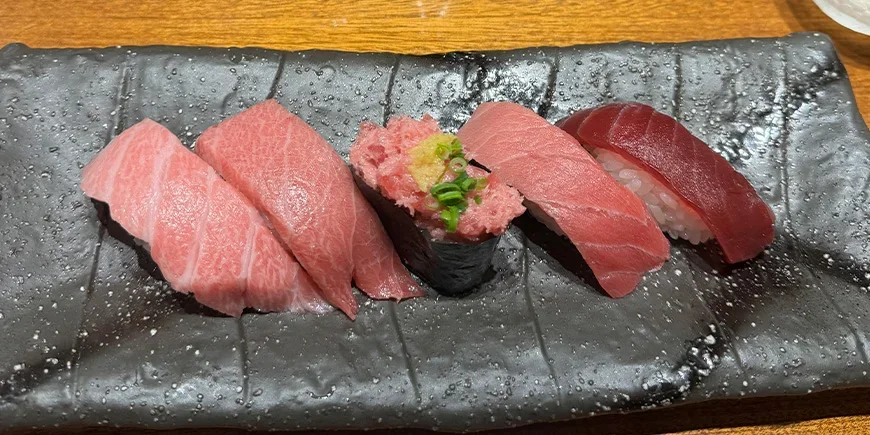
The familiar European sushi pieces with cream cheese, tempura prawns, and chilli mayonnaise are nowhere to be found on Japanese menus. Instead, most sushi restaurants in Japan mainly serve nigiri – a small mound of rice topped with a dab of wasabi and a slice of fish or seafood.
In Japan, sushi can be found in every price range – from conveyor-belt sushi restaurants to exquisite dining experiences, where each nigiri is shaped and served right in front of you by the sushi chef. You can even find eateries without seating, where sushi is enjoyed standing up. In our opinion, the best sushi is often found at the local market. Regardless of price, you can almost always count on the fish and rice being of outstanding quality.
Ramen
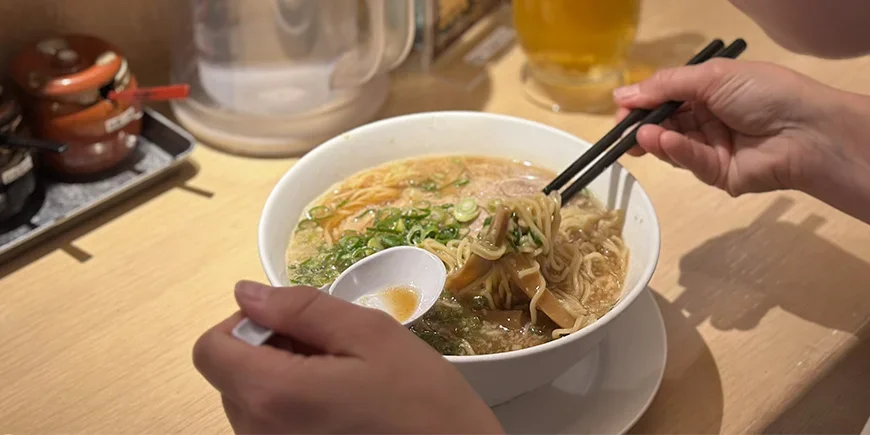
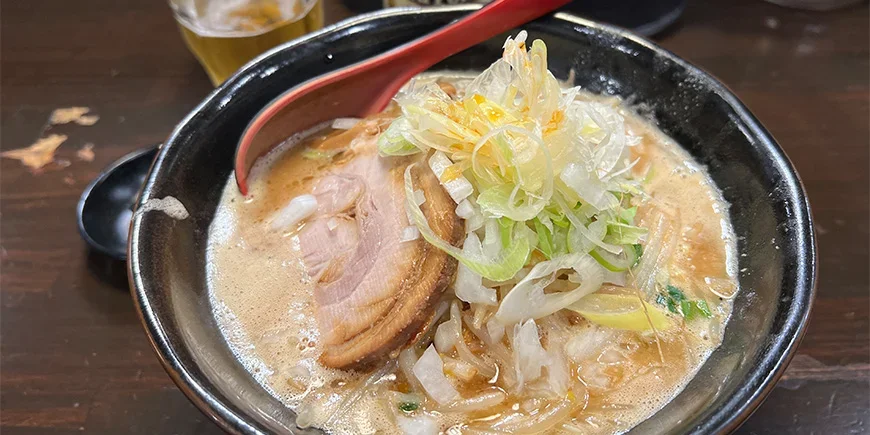
Although ramen originally came from China, today it’s the very essence of Japanese food culture. This steaming hot noodle soup, available in countless flavour varieties, is adored by both locals and travellers alike for its rich depth of taste and fresh ingredients. While ramen, to most people, simply means Japanese noodle soup, the word actually refers to the type of noodle used in the well-known dish. Today, however, the name is commonly used to describe the entire meal.
A classic ramen soup typically includes (ramen) noodles, a type of meat, a soy-marinated egg, and toppings such as seaweed, bean sprouts, or similar. Ramen is often divided into four main types depending on what the broth is made from. Shoyu and shio broths are based on soy sauce and salt, respectively, miso on fermented soybeans, and tonkotsu on pork bones. Tokyo is especially famous for its shoyu ramen, so if you only have ramen once during your visit, we highly recommend you do it here.
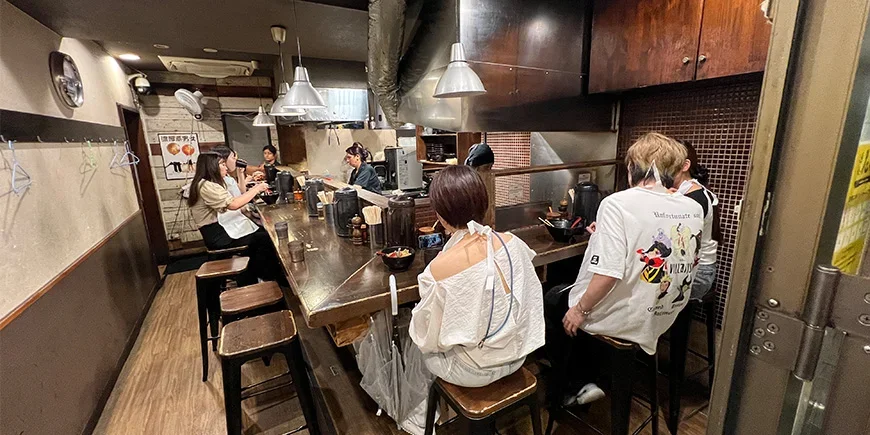
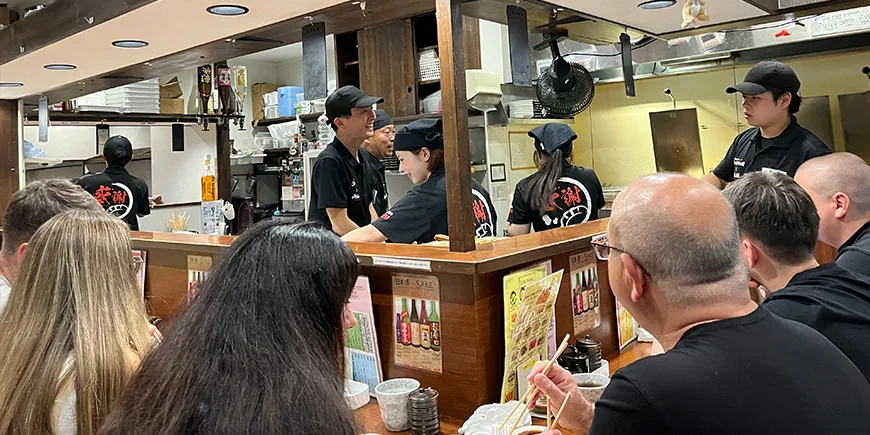
Eating ramen in Japan is not just a culinary experience – it’s also a wonderful encounter with authentic Japanese culture. Ramen restaurants are often tiny, with space for only five or six diners seated in a row, so it’s perfectly normal to queue for a spot. Most meals are eaten quickly and in silence – except for the loud slurping, which is certainly not considered rude in Japan, as it helps cool down the hot soup and noodles.
Tempura
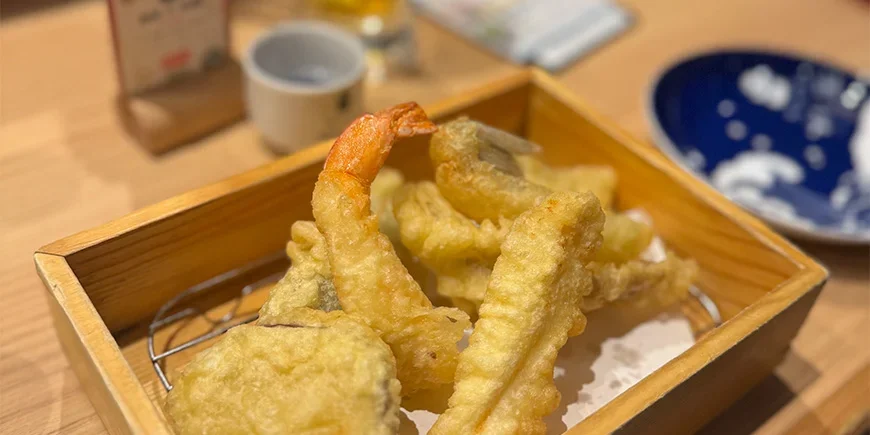
Tempura consists of crispy bites of fish, seafood, or vegetables, dipped in a light batter and deep-fried until golden and perfectly crunchy. And honestly, who doesn’t love that?
The dish originally arrived in Japan with Portuguese traders in the 16th century, but it has since become a firm favourite and an integral part of Japanese cuisine.
When tempura is served in a restaurant, you’ll sometimes be presented with a variety of different types all at once. The lighter flavours, such as fish and seafood, are usually enjoyed first, followed by the richer ones like sweet potato, beetroot, or other root vegetables, which are often included in a tempura selection.
Tempura is often served with a mild dipping sauce and can be enjoyed either as a dish in its own right or as part of a larger meal.
Gyoza
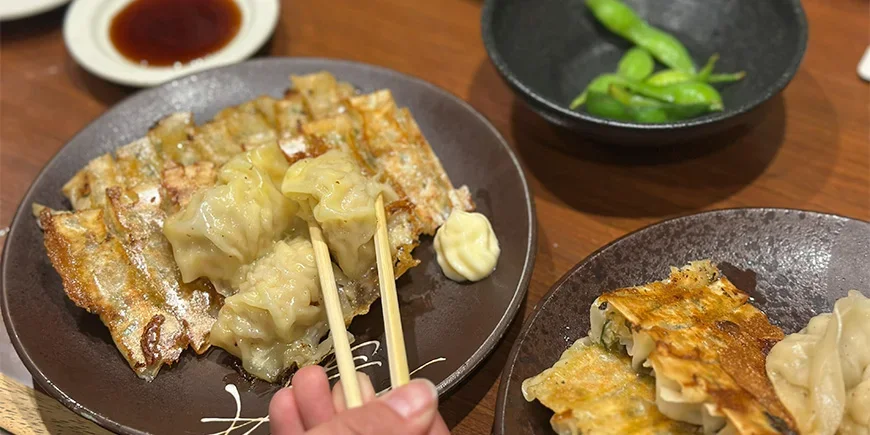
Gyoza are Japanese dumplings with a juicy filling. The classic version usually contains pork, cabbage, garlic, and ginger, but there are almost as many variations as you can imagine – for example chicken, mushrooms, cheese, seafood, or tofu. We were pleasantly surprised by a combination of chicken and mozzarella we tried at Chao Chao Gyoza in Kyoto.
There are many ways to prepare gyoza, but one of the most popular is yaki-gyoza, which are first pan-fried so the bottom becomes crispy before being steamed to perfection. This method gives the gyoza a wonderful balance of crispiness and softness. You can also find gyoza that are boiled or deep-fried.
You’ll often find gyoza served as a side dish with ramen, but they can just as easily be enjoyed on their own with a simple dip made of soy sauce and rice vinegar.
Okonomiyaki
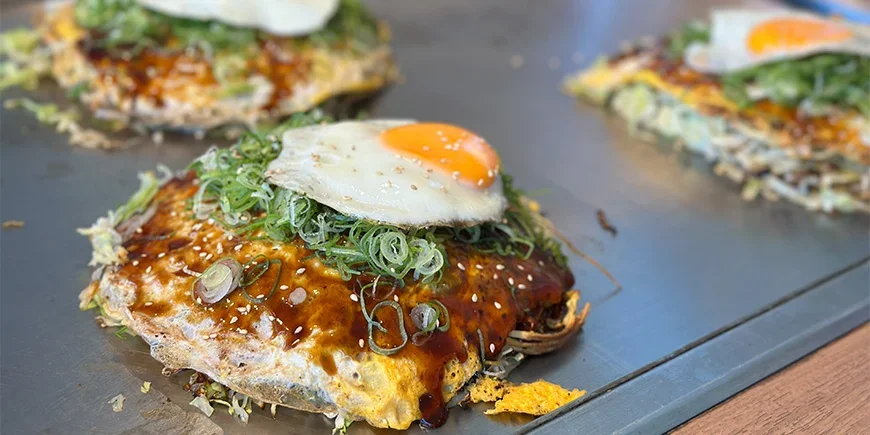
Okonomiyaki is often referred to as a Japanese pancake, though it actually has more in common with an omelette.
It’s mainly made from eggs, flour, and cabbage, but the name literally means “grill what you like”, which gives you a clue that almost anything can go in it – from pork and seafood to cheese and noodles.
When you eat okonomiyaki in Japan, you’re often seated in front of a large, hot griddle where the dish is cooked right before your eyes. Okonomiyaki is perfect for sharing – it’s large, hearty, and very filling. It’s typically topped with Japanese mayonnaise, okonomiyaki sauce (similar to Worcestershire sauce), and bonito flakes made from dried, fermented fish.
Okonomiyaki is especially popular in Osaka and Hiroshima, with each city offering its own take on this classic Japanese dish. The Osaka style is the most common throughout Japan and is the version described above. In Hiroshima’s version, the batter and fillings are cooked separately and often include fried noodles. We’ve tried okonomiyaki in both Osaka and Hiroshima – and we can highly recommend both!
Fun fact: Tokyo also has its own twist on the dish called monjayaki. The batter here is more liquid than in okonomiyaki, and when cooked, its texture resembles melted cheese – but it’s definitely worth a try. You’ll find an entire street dedicated to this dish, especially in the Tsukishima district.
Yakitori
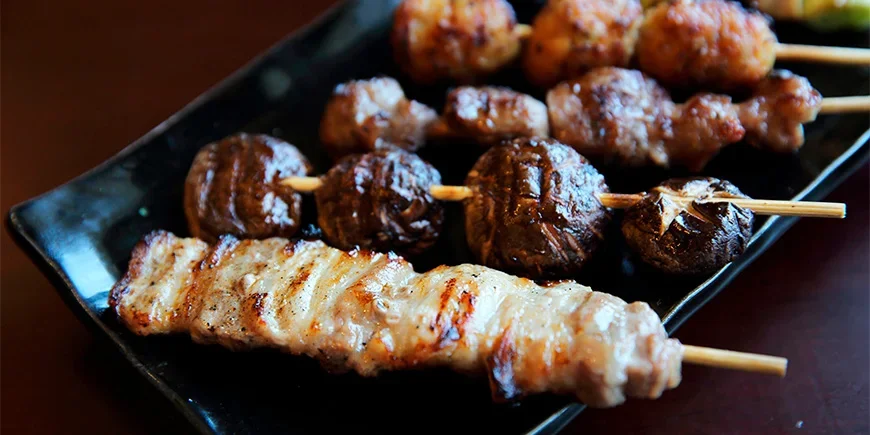
Yakitori, which literally means grilled poultry, are Japanese skewers brushed with either salt or a sweet soy-based sauce. You’ll often find them served in small, casual eateries or local izakayas – Japan’s equivalent of a bar.
When preparing yakitori, almost every part of the chicken is used, from the breast, thighs, and legs to the skin, liver, and cartilage. However, you will also come across skewers made with other types of meat, as well as vegetables and mushrooms.
These grilled skewers are often enjoyed as a quick snack with a beer, but you’ll also find them in specialised restaurants known as yakitori-ya. And chances are, you’ll end up ordering more than you intended.
Katsu curry
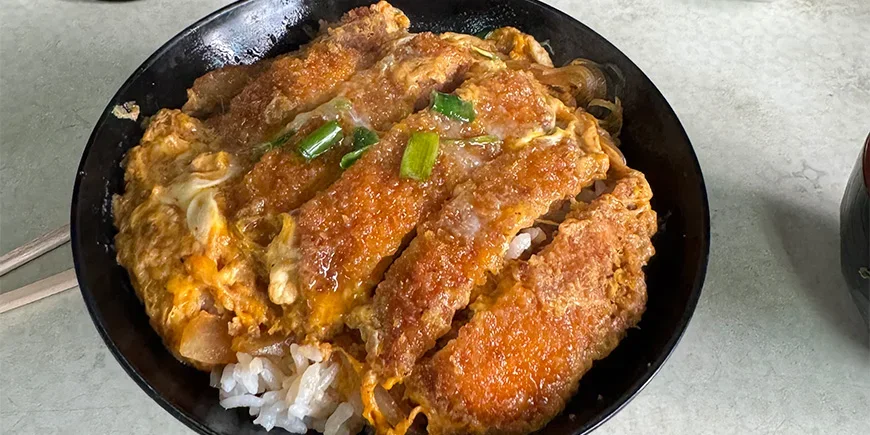
Katsu curry is a Japanese dish featuring a crispy, breaded cutlet of pork or chicken, served with rice and a mild, slightly sweet curry sauce.
Japanese curry differs from many other Asian curries as it’s thicker in texture and gentler in flavour.
The dish originally traces its roots back to India and reached Japan through the British. One popular story tells of a restaurant in Tokyo’s Ginza district where a hungry baseball player once asked for his cutlet and curry to be served together instead of as two separate dishes.
You can enjoy katsu curry all over Japan, with each city offering its own unique interpretation. The dish is simple yet packed with flavour, perfectly balancing the crispy coating with the smooth, rich sauce.
Udon
In Japan, noodles are far from “just” noodles. There are countless varieties, each prepared and used in cooking in different ways.
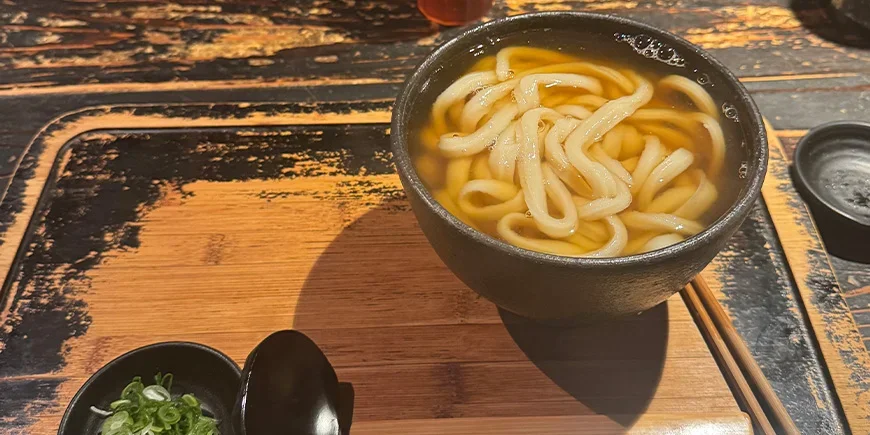
One particularly special type of noodle you’ll find across Japan is udon, which is especially popular in Nagoya. Udon are thick, soft wheat noodles that can be served in many different styles.
One of the most popular ways to enjoy udon noodles is kake udon, where the noodles are served in a clear, mild broth. Here, the focus is entirely on the texture and unique consistency of the noodles, which is why the flavour is kept delicate and subtle.
You can also try fried udon noodles with vegetables and meat, udon in curry soup, or the popular Tsukimi Udon, where the noodles are served with a raw egg yolk on top, symbolising the moon.
Soba
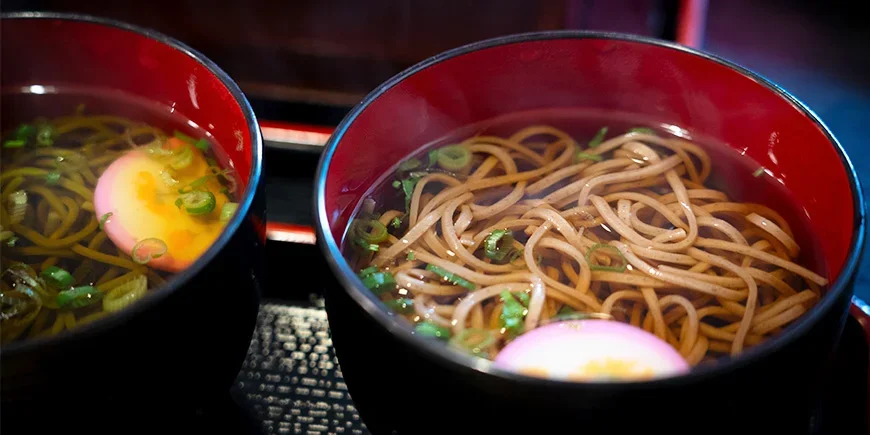
Soba is another type of noodle commonly found in Japanese cuisine. They are thinner than udon and made from buckwheat flour, which gives them a darker colour and a slightly different flavour.
The most popular way to serve soba noodles is as mori soba, where cold, boiled noodles are dipped in a soy-based sauce. However, soba noodles can be served in many different ways – both hot and cold.
Two places are particularly worth mentioning for soba enthusiasts. Nagano, in central Japan, is especially famous for its soba noodles as the region produces much of the buckwheat used to make them. And in Yamadera, near Sendai, where the famous temple complex awaits at the top of more than 1,000 stone steps, you’ll find several soba restaurants at the foot of the mountain – and there’s almost no better way to end your visit than with a bowl of local soba.
Onigiri
If you’re in need of a quick bite or a snack on the go, an onigiri is the perfect choice.
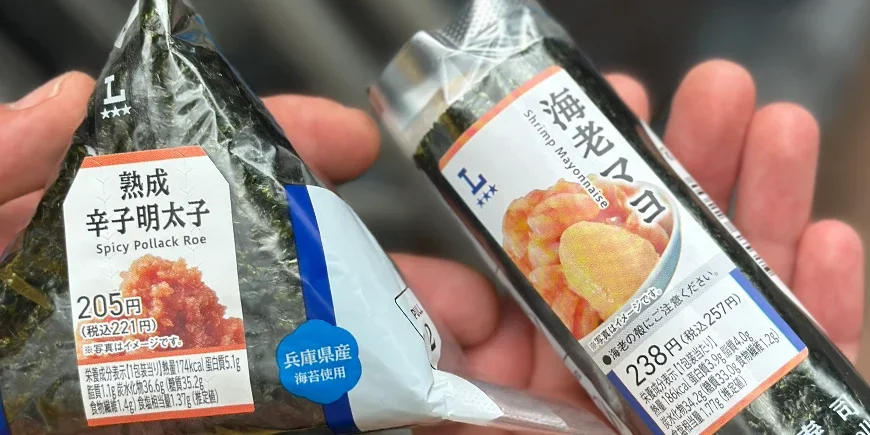
An onigiri is a small rice ball, often shaped into a triangle, with a tasty filling in the middle and wrapped in seaweed. You’ll find them everywhere, from small kiosks to train stations, and they come in countless varieties. 7-Eleven stores have become particularly popular on social media platforms like TikTok for their fun selection of snacks that any visitor to Japan simply has to try – including onigiri. And we can’t deny that we’ve had our fair share of 7-Eleven treats, especially their famous onigiri.
Some of the most popular types include tuna and mayonnaise, pickled plum, salmon, or salted seaweed.
Restaurant culture in Japan
Now that you’ve got some inspiration for what to eat, here are our top tips for how things work when dining out in Japan.
When you take a seat at the table in Japan, you’ll step into a food culture that may feel quite different from what you’ve experienced before. Most visitors quickly adapt to the Japanese way of doing things and return home with a wealth of memorable, local experiences.
What’s considered good etiquette in restaurants in Japan?
Knowing a few Japanese phrases can make a big difference when dining out. Many meals begin with the words itadakimasu, which express gratitude for the food, and end with gochisousama, a way of thanking someone for the meal.
The pace at many dining spots is often faster than what you may be used to in Europe. In small restaurants, meals are usually eaten quickly to free up space for the next guests waiting in line. However, this doesn’t mean the atmosphere is rushed. On the contrary, there’s a calm and sense of order that makes it easy to feel comfortable, even as a visitor.
How to find good places to eat in Japan
If you want to dine like the locals, it’s worth downloading the Japanese restaurant app Tabelog. It works a bit like a Japanese version of Tripadvisor, but it’s mostly used by the Japanese themselves.
A score above 3.5 is generally considered very good, and restaurants rated over 4.0 are among the absolute best. The app is mainly in Japanese, but with a little patience – and perhaps a translation feature – you can easily find your way around.
How to order food in restaurants in Japan
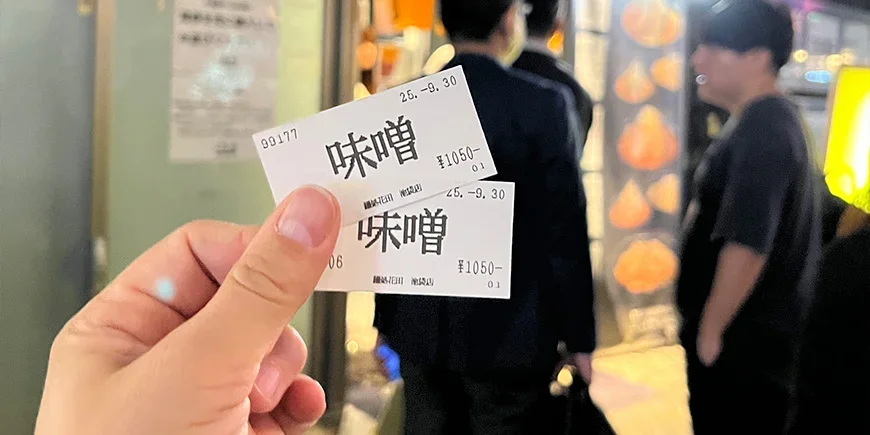
At many smaller restaurants, you order through a ticket machine at the entrance. You choose your dish on a screen or by pressing buttons, pay in cash, and then hand your ticket to the staff before sitting down. It might feel a bit unusual the first time, but the system is both efficient and easy to use.
In some places, you order directly from the staff. It’s perfectly normal to point at the menu or use a few English words. Although the language can be a bit of a barrier, many visitors find that the staff do their utmost to help.
If the menu is written only in Japanese, it can be useful to use the Google Translate app, which translates text through a photo. That way, you can easily see what’s on the menu and simply point out your chosen dish to the staff.
Feeling hungry for Japanese delights?
Whether you find yourself in a tiny ramen bar with just six seats, treat yourself to freshly made, top-quality sushi, or bite into one of the popular onigiri rice snacks, food in Japan is an experience in itself – one where you really get a sense of the Japanese passion for detail. You can also read more about delicious Japanese desserts.
Find your tour to Japan and take the first step towards your Japanese culinary adventure.
On this tour to Japan’s main island, you’ll experience a carefully selected collection of the country’s most remarkable highlights. Japan offers everything from sacred temples and magnificent Japanese gardens to fascinating culture and vibrant cities.
Experience the essence of Japan short and sweet with the most important cultural cities: Tokyo and Kyoto. The contrasts between the ultra-modern and the old traditions truly amazes most people.
Gain a unique insight into Japan’s many faces with visits to two of the country’s most fascinating cities, where Kyoto’s timeless traditions meet Tokyo’s modern rhythm.
Discover Japan’s cultural heritage on a tour through the breathtaking landscapes of the Japanese Alps. Follow in the footsteps of the samurai along the Nakasendo route, savour sake in the peaceful mountain town of Takayama, and round off your journey in vibrant Tokyo.
Look forward to the vibrant metropolises of Kyoto and Tokyo, and experience Japan’s natural beauty in full bloom among the mountains surrounding the Yamadera Temple and in Hakone National Park.
Embark on a magnificent tour through Japan’s many facets, unfolding like chapters in a living story. From sacred temples and breathtaking mountain landscapes to historic castles and vibrant metropolises.
On this tour to Japan’s main island, you’ll experience a carefully selected collection of the country’s most remarkable highlights. Japan offers everything from sacred temples and magnificent Japanese gardens to fascinating culture and vibrant cities.
Experience the essence of Japan short and sweet with the most important cultural cities: Tokyo and Kyoto. The contrasts between the ultra-modern and the old traditions truly amazes most people.
Gain a unique insight into Japan’s many faces with visits to two of the country’s most fascinating cities, where Kyoto’s timeless traditions meet Tokyo’s modern rhythm.
Discover Japan’s cultural heritage on a tour through the breathtaking landscapes of the Japanese Alps. Follow in the footsteps of the samurai along the Nakasendo route, savour sake in the peaceful mountain town of Takayama, and round off your journey in vibrant Tokyo.
Look forward to the vibrant metropolises of Kyoto and Tokyo, and experience Japan’s natural beauty in full bloom among the mountains surrounding the Yamadera Temple and in Hakone National Park.
Embark on a magnificent tour through Japan’s many facets, unfolding like chapters in a living story. From sacred temples and breathtaking mountain landscapes to historic castles and vibrant metropolises.