In October 2025, I, Trine from Marketing, travelled to Japan for the very first time. Usually, it’s me who writes these introductions to my colleagues’ adventures at destinations across the globe. But this time, it was my turn. A tour to Japan offers so many incredible experiences that it can be hard to decide which ones to highlight. Yet it was the story of Hiroshima that I felt most drawn to sharing.
When you travel to Japan, you can’t help but encounter a wealth of historical attractions, each weaving its own part of the country’s vibrant story: tales of shoguns, samurai, and emperors from centuries past, changes of power between Kyoto and Edo (as Tokyo was formerly known), and the key figures in legendary feuds that helped shape the nation.
From the very moment I arrived in Hiroshima, something about the place made a lasting impression on me. Perhaps it was partly thanks to the wonderful weather, and how easy it was to get from the station to the hotel, even with a heavy suitcase. Most experiences do seem brighter when the sun is shining.
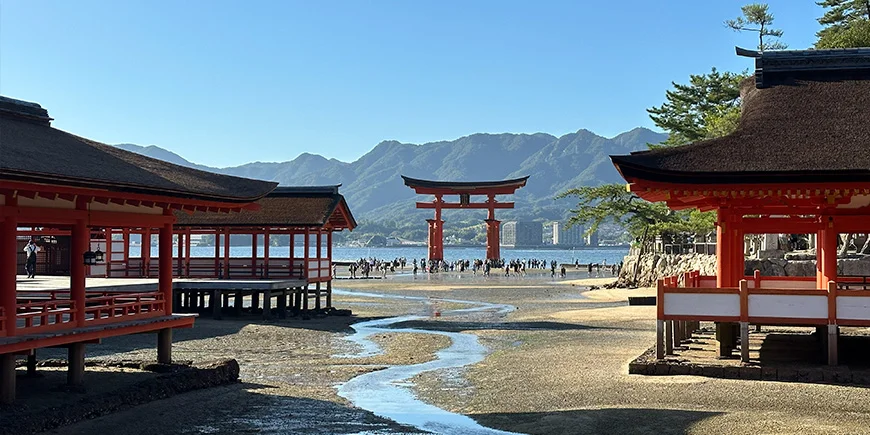
Hiroshima, of course, has its more “classic” attractions, such as the picturesque Itsukushima Shrine on Miyajima Island, Hiroshima Castle, and the elegant Japanese landscape of Shukkeien Garden.
But the city is perhaps best known as the site of the first atomic bomb ever dropped on a populated area.
August 6th, 1945. A date that is inscribed in many places throughout the city.
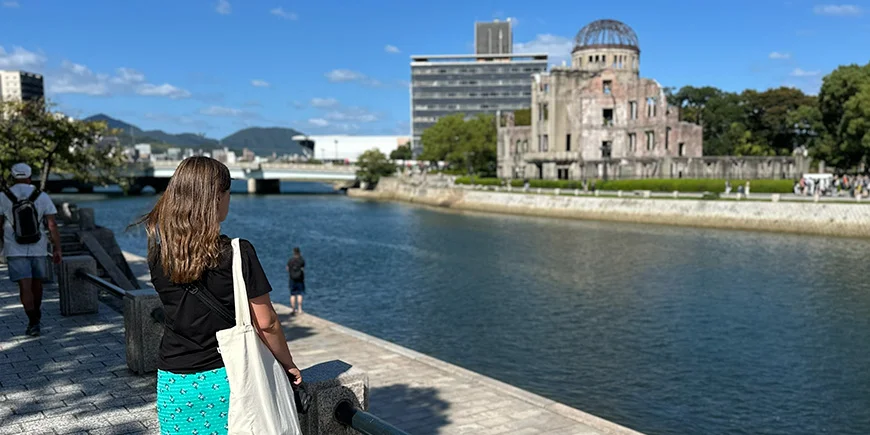
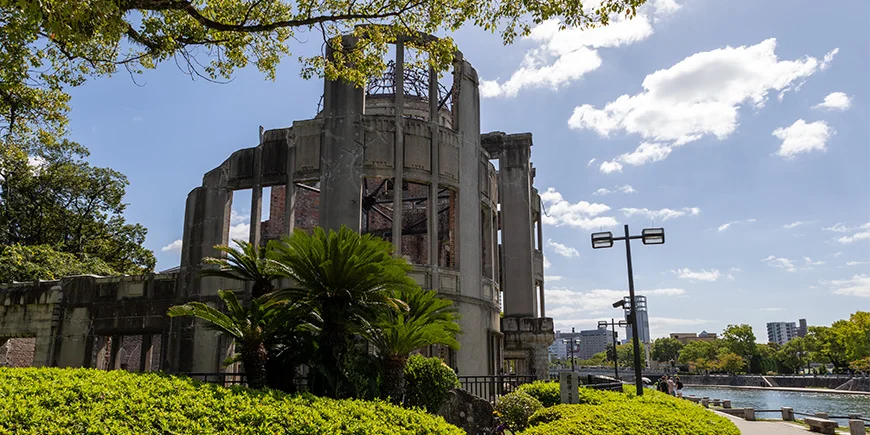
In the Hiroshima Peace Memorial Park, you can see buildings that predate the bombing, such as the Atomic Bomb Dome. The dome partially survived the attack because it was constructed from concrete, unlike many of the other buildings—made of wood—which perished and no longer exist. Today, it stands as a monument, giving you a sense of what it once looked like, before the walls crumbled and debris was strewn across the ground beneath it.
But these stories are kept alive not only through the buildings and monuments, but also by the people who live in Hiroshima today.
Our guide in Hiroshima was a young man of 28, who went by the guide name ‘Kane’, as he thought we might struggle to pronounce his real name. Kane was born and raised in Hiroshima, and his 90-year-old grandmother had been living on one of Hiroshima’s many islands when the bomb fell.
Imagine witnessing those events firsthand, and ensuring that the stories are passed down for generations to come.
And it was, above all, these personal stories that stayed with me from Hiroshima.
This year (2025) marks 80 years since the attack took place, yet the stories remain as relevant as ever.
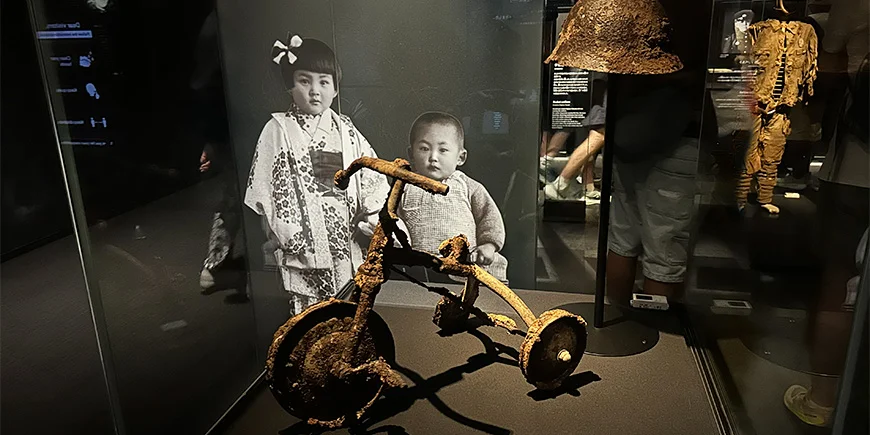
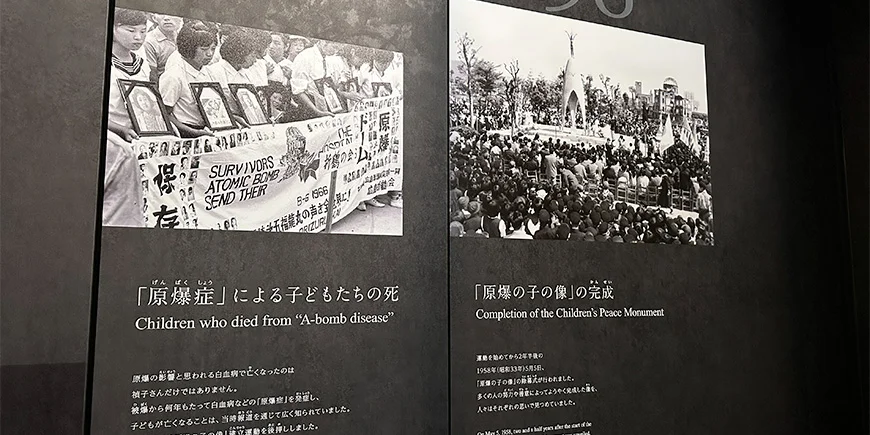
The museum in the park tells many of these stories—of those who survived and all those who did not. For me personally, it was the stories about the children that struck the deepest chord. The visual images of burnt tricycles and accounts of children begging for water through their tears leave a lasting impression.
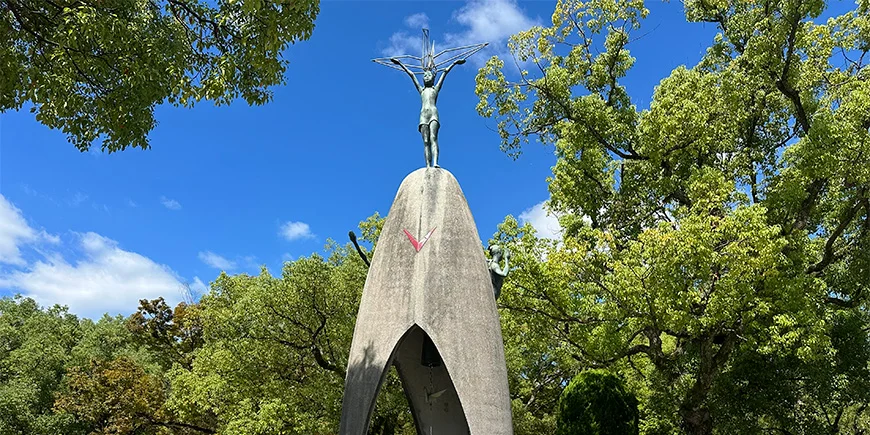
The story of Sadako Sasaki has become a symbol of hope and peace. Sadako died from leukaemia caused by radiation, ten years after the attack. While she was in hospital, she folded origami cranes, inspired by the legend that if you fold 1,000 cranes, your wish will come true. Sadako’s wish was to recover and for there to be peace in the world. Her classmates later collected money for the monument that now stands in the park, the Children’s Peace Monument, where Sadako is depicted on the top holding a crane in her hand.
Sadako’s story is just one among many you can experience at the museum. I left with tears in my eyes and a lump in my throat, but also with a valuable experience I would not have missed for the world.
Although my journey to Japan was filled with breathtaking temples, stunning natural scenery, and city streets illuminated by neon lights, it was the stories I heard at the Peace Park and museum that moved me the most.
These are tales that serve as a reminder of where we, as humans, should place our attention—and underline the importance of learning from the past, so that such events are never repeated.
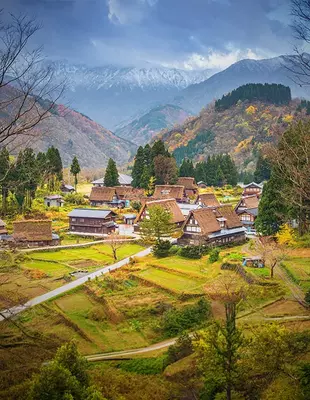
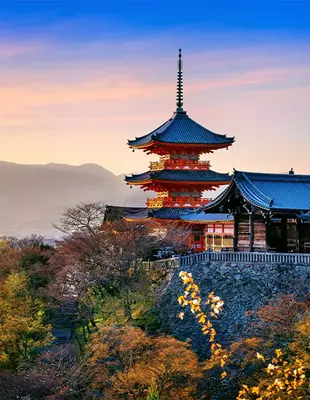
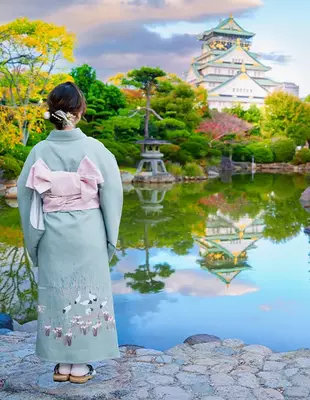
On this tour to Japan’s main island, you’ll experience a carefully selected collection of the country’s most remarkable highlights. Japan offers everything from sacred temples and magnificent Japanese gardens to fascinating culture and vibrant cities.
Experience the essence of Japan short and sweet with the most important cultural cities: Tokyo and Kyoto. The contrasts between the ultra-modern and the old traditions truly amazes most people.
Gain a unique insight into Japan’s many faces with visits to two of the country’s most fascinating cities, where Kyoto’s timeless traditions meet Tokyo’s modern rhythm.
Discover Japan’s cultural heritage on a tour through the breathtaking landscapes of the Japanese Alps. Follow in the footsteps of the samurai along the Nakasendo route, savour sake in the peaceful mountain town of Takayama, and round off your journey in vibrant Tokyo.
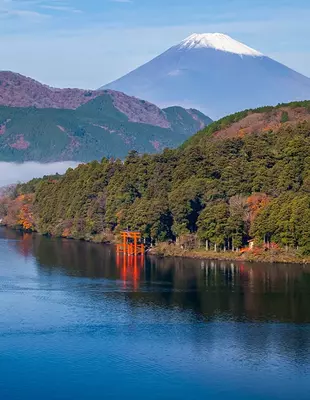
Look forward to the vibrant metropolises of Kyoto and Tokyo, and experience Japan’s natural beauty in full bloom among the mountains surrounding the Yamadera Temple and in Hakone National Park.
Embark on a magnificent tour through Japan’s many facets, unfolding like chapters in a living story. From sacred temples and breathtaking mountain landscapes to historic castles and vibrant metropolises.
On this tour to Japan’s main island, you’ll experience a carefully selected collection of the country’s most remarkable highlights. Japan offers everything from sacred temples and magnificent Japanese gardens to fascinating culture and vibrant cities.
Experience the essence of Japan short and sweet with the most important cultural cities: Tokyo and Kyoto. The contrasts between the ultra-modern and the old traditions truly amazes most people.
Gain a unique insight into Japan’s many faces with visits to two of the country’s most fascinating cities, where Kyoto’s timeless traditions meet Tokyo’s modern rhythm.
Discover Japan’s cultural heritage on a tour through the breathtaking landscapes of the Japanese Alps. Follow in the footsteps of the samurai along the Nakasendo route, savour sake in the peaceful mountain town of Takayama, and round off your journey in vibrant Tokyo.
Look forward to the vibrant metropolises of Kyoto and Tokyo, and experience Japan’s natural beauty in full bloom among the mountains surrounding the Yamadera Temple and in Hakone National Park.
Embark on a magnificent tour through Japan’s many facets, unfolding like chapters in a living story. From sacred temples and breathtaking mountain landscapes to historic castles and vibrant metropolises.