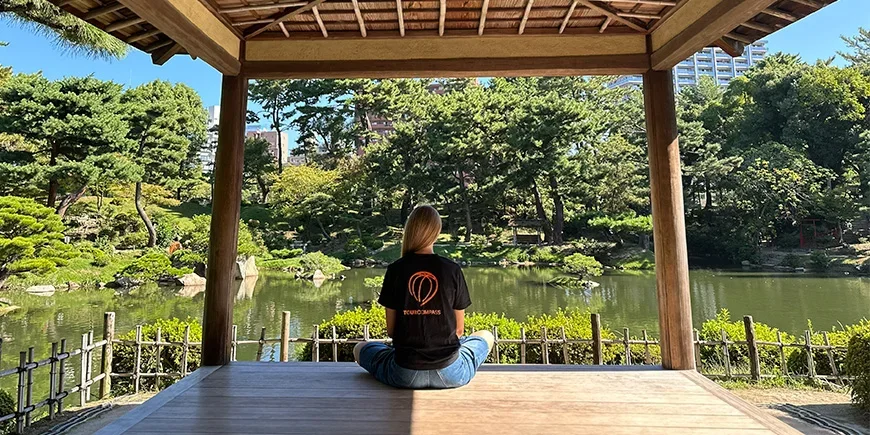
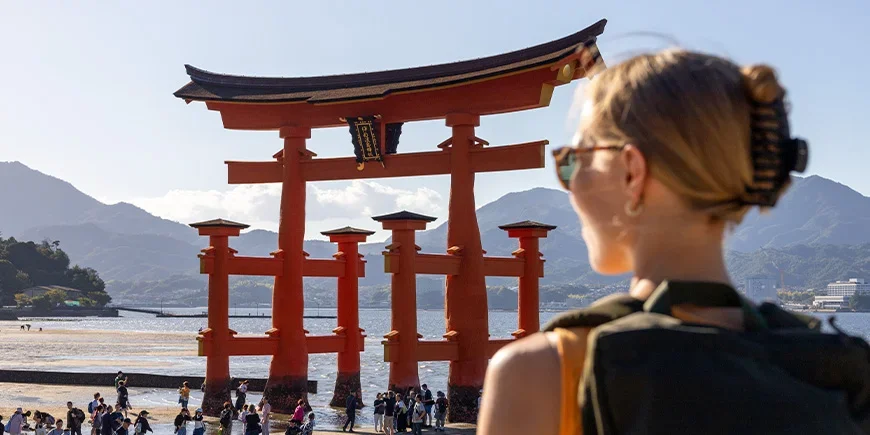
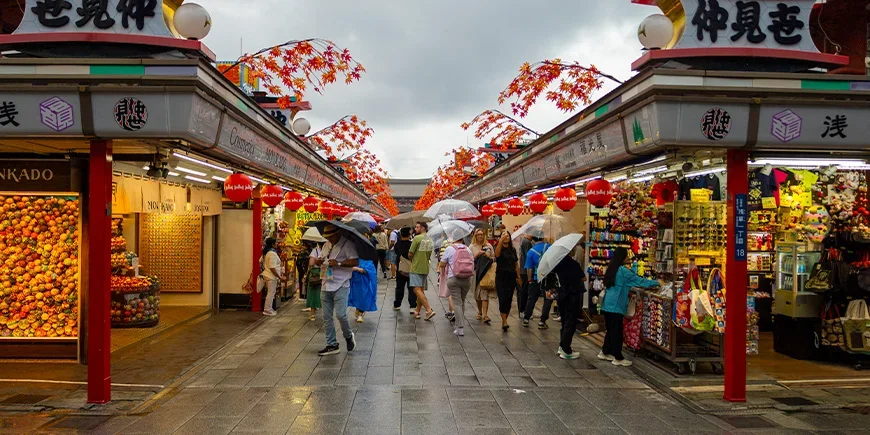
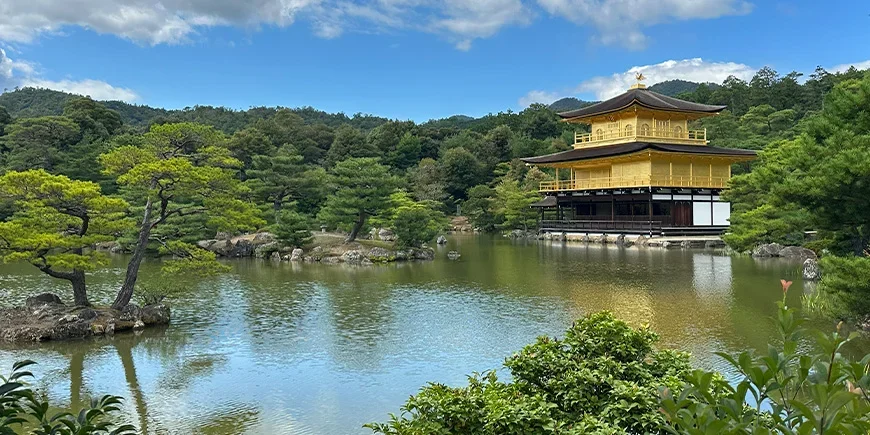
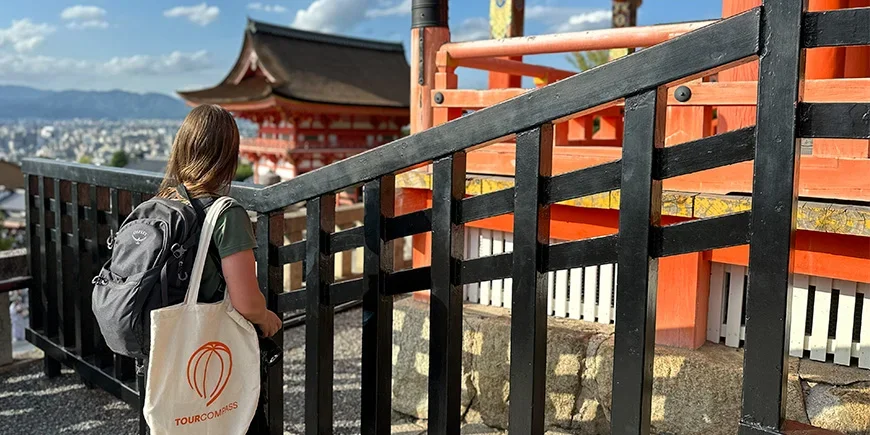
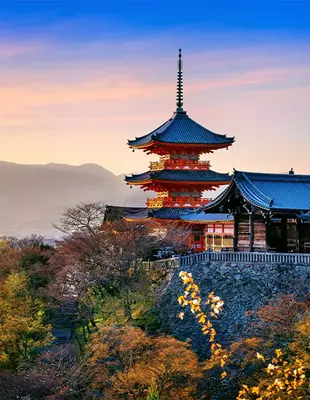
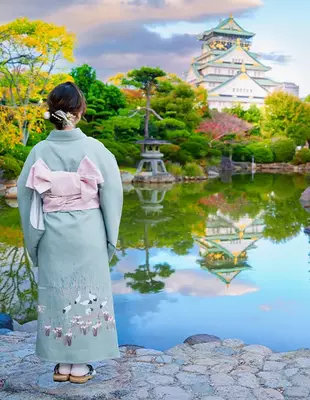
Japan is a country where ancient temple complexes and futuristic cities merge to create a truly unique travel experience.
But when is the best time to travel to Japan?
The short answer is that spring and autumn usually offer the most pleasant weather. However, the ideal time to visit also depends on whether you dream of cherry blossoms, autumn colours, winter landscapes, or vibrant summer festivals. In this blog post, you’ll get an overview of Japan’s climate and the experiences each season has to offer.
Please note that this guide is for general guidance only. It is based on historical weather patterns in Japan throughout the year, but in practice, the conditions you encounter may differ. We also focus primarily on the areas we offer tours to.
The best time to go to Japan?
The best time to go to Japan is during spring (March to May) and autumn (September to November), when the weather is usually mild and pleasant.
That said, Japan is truly a year-round destination, with each season offering its own unique highlights. So, the best time to travel depends on what you dream of experiencing – for example, the cherry blossom season, the vibrant autumn colours, the winter landscapes, or the warm summer climate.
Below, you can read more about Japan’s seasons and their weather patterns.
The climate in Japan
Most of Japan enjoys a temperate climate. However, as the country stretches a long way from north to south, the weather varies significantly between regions – ranging from a subarctic climate in the far north on Hokkaido to a subtropical one in the southernmost areas, such as Okinawa.
Approximately 70% of Japan’s total area is made up of hills and mountains, and these altitude differences also affect the weather. In regions around Nagano, Sendai, and Kanazawa, temperatures tend to be lower, which is especially welcome during the summer months, and there is more precipitation, particularly in the form of snow in winter.
By way of comparison, major cities such as Tokyo and Kyoto, which are located at lower altitudes, enjoy a milder climate with warmer summers and less snow.
Typhoon season
From May to October is typhoon season in Japan. During this period, the warm and humid climate can trigger tropical storms that bring heavy rain and strong winds, particularly in southern and coastal areas. Late summer and early autumn can therefore bring more changeable weather in some regions, although it can still be an excellent time to travel.
Most typhoons never actually make landfall but remain at sea. Japan is generally well-prepared and accustomed to dealing with tropical storms, so as a visitor, you can usually still enjoy your tour.
Japan’s seasons
The weather in Japan largely follows the same seasons we experience at home – spring, summer, autumn, and winter – and during the same times of the year.
In short, here’s what to know about Japan’s weather:
Spring: mild and pleasant
Summer: warm, humid, and rainier
Autumn: mild, clear, and comfortable
Winter: cool and dry, with snow in some regions
Get a glimpse of the highlights of the different seasons below.
Japanese spring (March to May)
Spring in Japan runs from March to May and is one of the most sought-after times of year to experience the country.
Daytime temperatures vary but are generally mild, especially if you’re south of Tokyo in cities such as Kyoto, Osaka, Nara, or Hiroshima. Early spring mornings and evenings can still be cool, so it’s a good idea to pack layered clothing.
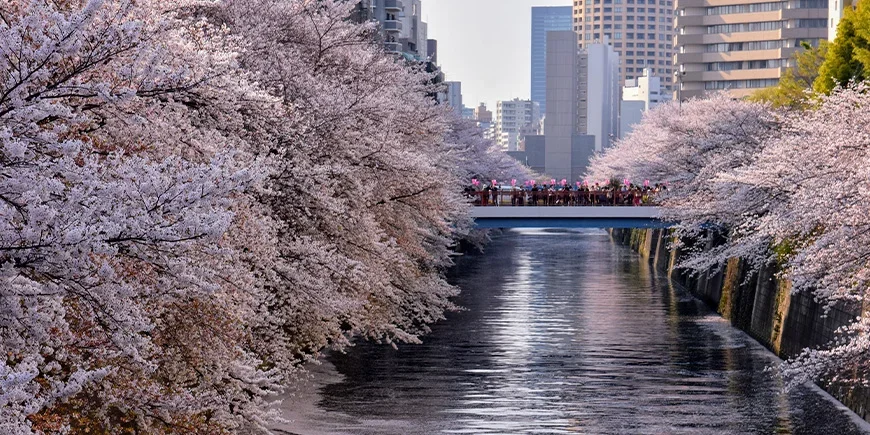
During this season, the landscape transforms as the cherry blossoms, or sakura, blanket parks, temples, and streets in shades of pink. The trees bloom at different times across the country – typically starting in the south at the end of March and finishing in the northern, cooler regions around May. Weather conditions from year to year also affect the exact timing of the blossoms. For instance, in 2026, it began earlier than usual, as the country had experienced unusually high temperatures in February.
The Japanese spring also brings with it the holiday week known as ‘Golden Week’, celebrated at the end of April and the beginning of May. During Golden Week, there are several other public holidays, and this time of year is particularly busy as the Japanese take time off themselves.
Japanese spring is for you if you…
dream of experiencing the magic of cherry blossom season
prefer mild temperatures
want ideal conditions for exploring both culture and nature
The Japanese summer (June to August)
Summer in Japan, from June to August, is characterised by warm temperatures, high humidity, and more rainfall than at any other time of year. The rainy season (tsuyu) begins in June and its length and intensity vary from year to year. The hottest and most humid months are July and August.
In major cities such as Tokyo, Nagoya, Kyoto, and Osaka, the heat can be intense, so it’s a good idea to plan your activities at a slower pace. Fortunately, you’ll find convenience stores and cafés throughout the cities, where you can treat yourself to a cold drink between temple visits, shopping, and strolls through the streets.
During the summer months, it’s also worth heading to Japan’s cooler regions. In the Japanese Alps and towns such as Kanazawa, Nagano, and Takayama, as well as Sendai further north, you can enjoy fresh mountain air and lush green scenery, offering a refreshing contrast to the heat of the cities.
Summer in Japan is also festival season, with traditional celebrations known as “matsuri” taking place in towns and communities across the country. Among the most famous are Gion Matsuri in Kyoto, Tokyo’s Sumidagawa Fireworks Festival and Tanabata Matsuri in Sendai – all typically held in July.
The Japanese summer is for you if you…
love to travel even when it gets very hot
want to visit Japan’s mountain regions
wish to experience Japan at its most energetic and vibrant
The Japanese autumn (September to November)
For many, the Japanese autumn from September to November is one of the very best times to travel to Japan. Daytime temperatures are lower and less intense than during the height of summer, and the weather is beautifully clear.
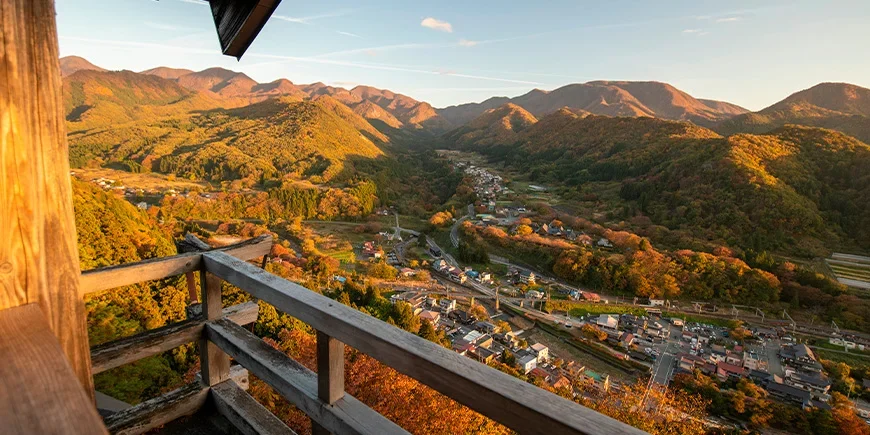
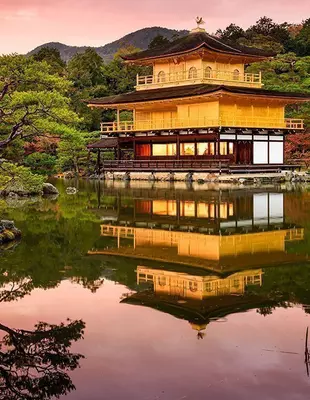
Autumn is the perfect season to enjoy time in Japan’s fascinating cities such as Tokyo, Osaka, and Kyoto, where the pleasantly mild weather invites you to spend hours exploring different districts, charming streets, and local boutiques. It’s also a wonderful time to experience Japan’s natural beauty in areas like Hakone National Park, the Japanese Alps, the mountains around Yamadera, and the many traditional gardens, for example Shinjuku Gyoen (Tokyo), Kenrokuen (Kanazawa), and Isuien (Nara).
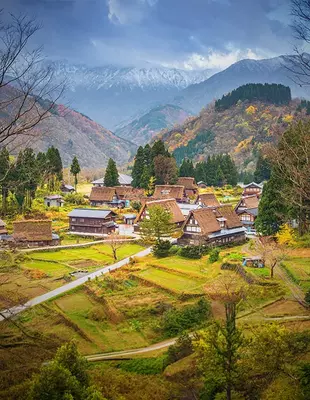
In late autumn, Japanese autumn’s answer to the cherry blossom season, koyo, paints the landscape in a symphony of reds, yellows, and browns – a mesmerising sight you’ll never forget. Just like the sakura, the autumn colours sweep across the country at their own natural pace. The first hues appear in the north and gradually make their way south as the season unfolds. Unlike the fleeting sakura, koyo lasts longer, making it easier to plan your tour if you want the best chance to witness Japan’s spectacular autumn palette.
Japanese autumn is for you if you…
prefer milder temperatures than the height of summer
want pleasant weather to explore both culture and nature
would love to see the landscape transform during koyo
The Japanese winter (December to February)
Winter in Japan, from December to February, is the coldest time of the year, yet there are still plenty of good reasons to visit during this season. As always, the weather varies greatly depending on where you are.
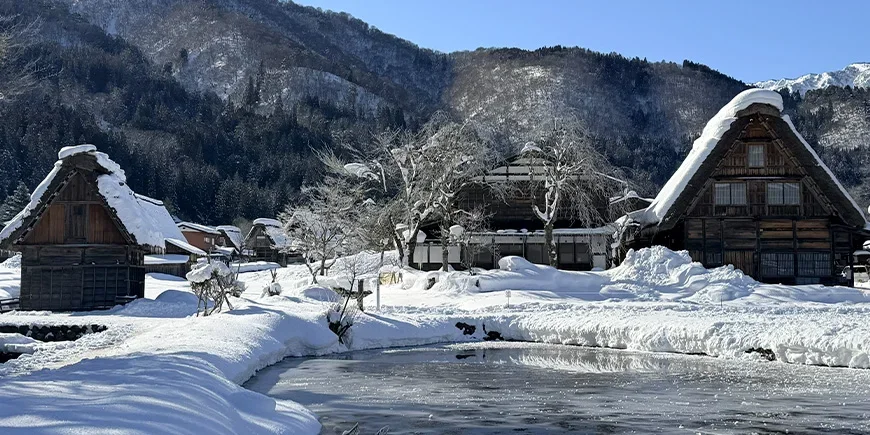
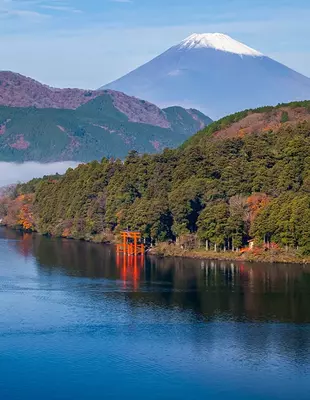
In cities such as Tokyo, Kyoto, Osaka, and Hiroshima, snow is a rarity, while places like Takayama and Shirakawa-go often see heavy snowfall. The crisp winter temperatures also bring clear skies, and this is the best time of year to catch a glimpse of the snow-covered peak of Mount Fuji – whether from observation points in Tokyo such as Tokyo Tower or Tokyo Skytree, or up close in Hakone National Park.
If you dream of experiencing a Japanese onsen – the local version of natural hot springs – winter is the ideal time to do so. You might even be lucky enough to sit immersed in steaming hot water while snow gently decorates the surrounding landscape.
But the Japanese winter offers much more than crisp weather. If you’d love to see blossoms in Japan without the crowds, you might be fortunate enough to witness both plum blossoms and the early-blooming cherry variety, Kawazu-zakura, as early as February. For example, the Setagaya Ume Matsuri flower festival is held in Hanegi Park in south-west Tokyo from mid-February, where more than 600 plum trees burst into bloom.
Last but not least, there are far fewer travellers during the winter months. So, if you’d like to experience the country with fewer visitors (often at lower prices), this season is an excellent choice.
Please note that we currently do not offer tours in December and January.
The Japanese winter is perfect for you if you…
don’t mind the cold temperatures
want a more authentic and peaceful tour with fewer visitors
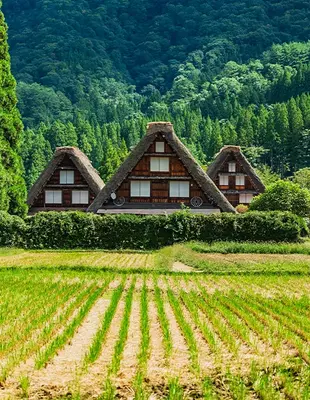
wish to experience unique winter landscapes, e.g. in Shirakawa-go
Not sure when to travel?
With its fascinating mix of ancient traditions and modern city life, a tour of Japan offers a different experience each season – revealing something new and inspiring no matter when you choose to go.
Although spring and autumn are, for many, the best times to travel if you’re after the most pleasant weather, summer and winter each have their own clear advantages
If you’re unsure when to go, or how to make the most of your tour, our experienced travel specialists are ready to guide you – before, during, and after your journey.
On this tour to Japan’s main island, you’ll experience a carefully selected collection of the country’s most remarkable highlights. Japan offers everything from sacred temples and magnificent Japanese gardens to fascinating culture and vibrant cities.
Experience the essence of Japan short and sweet with the most important cultural cities: Tokyo and Kyoto. The contrasts between the ultra-modern and the old traditions truly amazes most people.
Gain a unique insight into Japan’s many faces with visits to two of the country’s most fascinating cities, where Kyoto’s timeless traditions meet Tokyo’s modern rhythm.
Discover Japan’s cultural heritage on a tour through the breathtaking landscapes of the Japanese Alps. Follow in the footsteps of the samurai along the Nakasendo route, savour sake in the peaceful mountain town of Takayama, and round off your journey in vibrant Tokyo.
Look forward to the vibrant metropolises of Kyoto and Tokyo, and experience Japan’s natural beauty in full bloom among the mountains surrounding the Yamadera Temple and in Hakone National Park.
Embark on a magnificent tour through Japan’s many facets, unfolding like chapters in a living story. From sacred temples and breathtaking mountain landscapes to historic castles and vibrant metropolises.
On this tour to Japan’s main island, you’ll experience a carefully selected collection of the country’s most remarkable highlights. Japan offers everything from sacred temples and magnificent Japanese gardens to fascinating culture and vibrant cities.
Experience the essence of Japan short and sweet with the most important cultural cities: Tokyo and Kyoto. The contrasts between the ultra-modern and the old traditions truly amazes most people.
Gain a unique insight into Japan’s many faces with visits to two of the country’s most fascinating cities, where Kyoto’s timeless traditions meet Tokyo’s modern rhythm.
Discover Japan’s cultural heritage on a tour through the breathtaking landscapes of the Japanese Alps. Follow in the footsteps of the samurai along the Nakasendo route, savour sake in the peaceful mountain town of Takayama, and round off your journey in vibrant Tokyo.
Look forward to the vibrant metropolises of Kyoto and Tokyo, and experience Japan’s natural beauty in full bloom among the mountains surrounding the Yamadera Temple and in Hakone National Park.
Embark on a magnificent tour through Japan’s many facets, unfolding like chapters in a living story. From sacred temples and breathtaking mountain landscapes to historic castles and vibrant metropolises.